The Tracker Tango in the Data Jungle: Which Device Should I Believe?
Whoop says rest day, Garmin recommends threshold training. Why wearables contradict each other, and why picking your measurement method matters more than asking who is right.

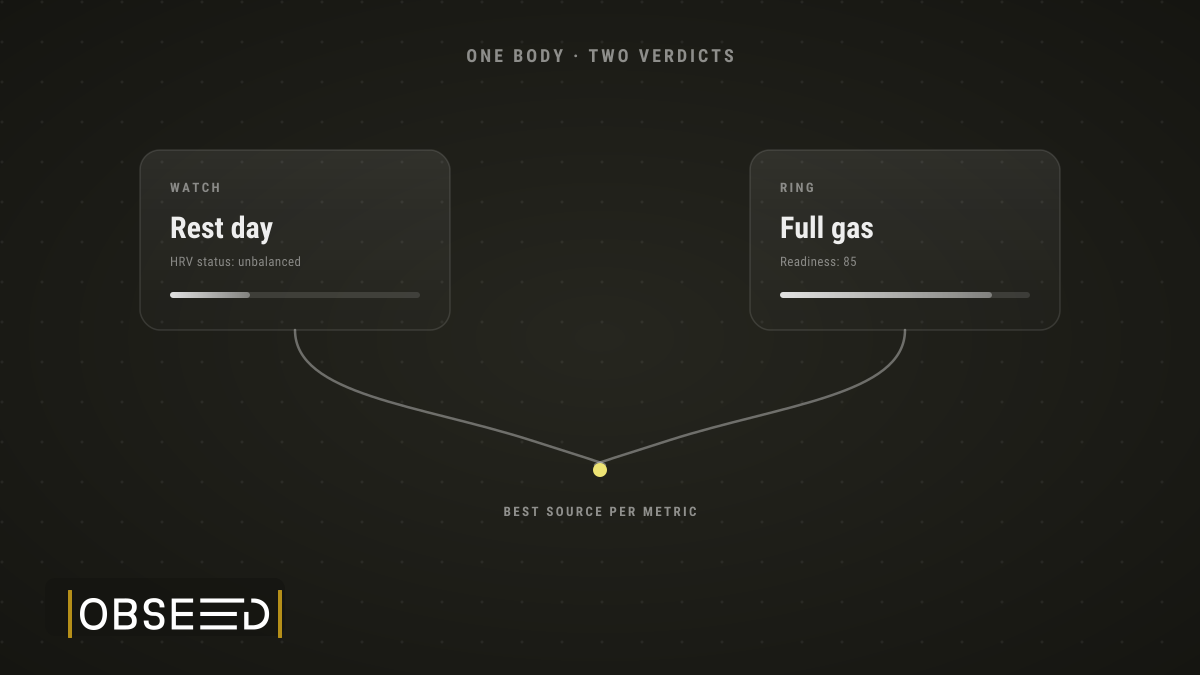
TL;DR: Different wearables measure in different ways, which sometimes leads the analyses and verdicts of their apps to contradict each other. What matters is choosing the kind of measurement you can personally take most consistently. That makes your data meaningful in itself and prevents exactly this kind of confusion.
In an age where sport and health are tracked almost around the clock, it happens quickly that several devices are supposedly measuring the same things. Unfortunately, they love to disagree, which raises the question: whom should you believe?
Picture this: You wake up in the morning, feel pretty decent, and take a first look at your various health apps. Lo and behold: Whoop says “rest day”, while Garmin recommends “threshold training”. How can that be?
Before you get worked up about the supposed inaccuracy of your trackers, or start wondering whether you are even using these wearables correctly: neither is likely the case here. The real crux lies buried in a question that needs asking first: what is actually being measured and reported?
The conflicts and contradictions show up at two points in particular: training zones and sleep analysis, especially HRV. Let’s start with what precedes recovery: the sport itself.
Structuring training around intensity zones can by now be called “standard”. No matter which device you work with (for simplicity’s sake we’ll stick with our two examples, Garmin and Whoop): during onboarding, initial zones are calculated from facts you enter, like age, height, weight and so on, and then updated over time. So far, so good: your body is supposed to develop, and that inevitably means these zones shift over time as well. What often remains hanging in the air, though, is the question of HOW the zones come about, and WHAT they are ultimately meant to train.
And here it gets complicated for the first time: While Whoop calculates one single set of zones, Garmin gives you zones per sport. And that’s not all: the calculation methods are fundamentally different, too. How far apart the results can drift was shown by a test of AI training platforms at Triathlete: for the very same athlete, Garmin’s zone 2 reached all the way into another platform’s zone 3.
Whoop follows the so-called Karvonen method, which factors in resting heart rate, maximum heart rate, and the so-called heart rate reserve. (If you want to know more: here is an explanation.) Garmin, on the other hand, bases its zones on determining thresholds, from which the zones are then derived.
Which method is “better” shall remain an open question. Generally speaking, it makes perfectly good sense to work with different heart rate or power zones across different kinds of movement, because the body does not work in just one way.
The same goes for sleep, our second topic: Here, too, we often see contradictory numbers and correspondingly get verdicts that can be confusing at times (we’ve already compared in detail how far Garmin, Oura, and Whoop drift apart on sleep). What could be behind that?
Assuming both sensors (the watch and the band) are worn 24 hours a day, you would think they should produce the same values. Right?
This is where it gets a little more complex, and the answer is: yes, but also no. Since sleep adds yet another layer, let’s bring a third reference on board: the Oura ring, by its own proclamation the most accurate sleep tracker currently on the market. (Which, by the way, is not plucked out of thin air: a comparison study across 536 nights measured an average deviation from ECG of around 5.96% for Oura, and 8.17% for Whoop.)
One Night, Three Different Verdicts?
That, in turn, is relatively easy to explain: the metric in focus for recovery is the so-called heart rate variability, HRV for short. Put as simply as possible, it tells us how irregularly our heart beats.
Irregularly?
Exactly – the more relaxed a nervous system and the whole body are, the more “arbitrarily” the heart is allowed to work, which means it can recover better. These differences in beat rate are tiny, though: we are talking about milliseconds, captured in the fluctuations between consecutive heartbeats. Very roughly speaking: the higher this value, the better.
So where do the differing verdicts on recovery, and depending on the device, training readiness, come from, if we assume that all of them a) are worn 24 hours a day, b) capture the same values, and c) measure them with comparable accuracy?
Quite simple: every brand has its own formula for putting a number on recovery:
Garmin, for instance, captures the full 24 hours and averages the values. Oura does too, but splits them into 5-minute blocks, and Whoop scores the last deep sleep phase. Add to that calculation methods that are, of course, each proprietary. For us that means: the individual ecosystems do not talk to each other. Recovery, in this case, is the manufacturer’s opinion, not your individual state. And we are left spoilt for choice.
So What Now?
In the end, it comes down to what suits you personally best. You can have everything measured by one device (Garmin, say), or pick and choose which values you want from where. This point matters: there is no right or wrong here. Maybe you have had this exact discussion before: while for one person Whoop mirrors their own daily feeling to a tee, for someone else it is miles off their subjective perception, and Oura or Garmin show far more clearly what is actually going on in their body.
This is where obseed comes in: our users have the option to set these preferences directly as their base configuration.
Sleep from Whoop, sport from Garmin – that is possible with a simple setting. This way you can pull the best – or favourite – values for each domain directly from wherever you feel most at home.
Combined with the direct option of setting your own performance and training zones so that they represent your body and how it works best, we offer the possibility of a truly individual measurement and assessment of health, performance, and recovery.
Read Next
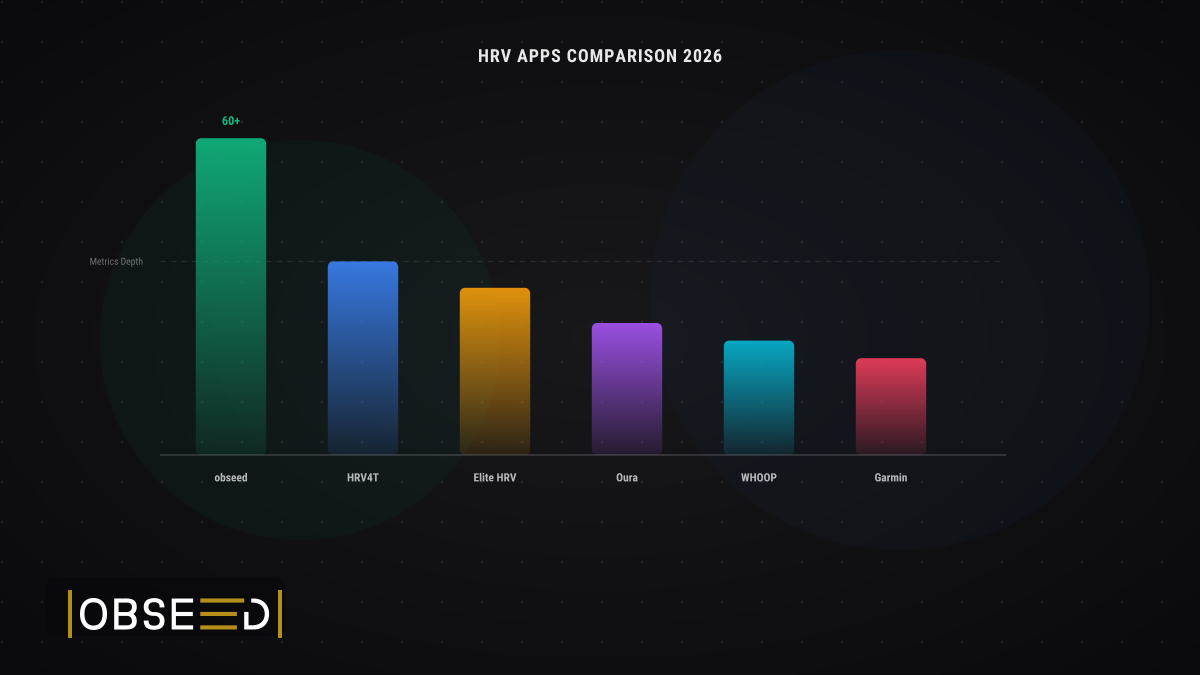
The Best HRV Apps for Endurance Athletes (2026 Comparison)
Comparing the top HRV apps for runners, cyclists, and triathletes. Oura Gen 3 hits 7.15% MAPE — see how obseed, HRV4Training, Elite HRV, WHOOP, and Garmin Connect stack up on metrics depth and value.

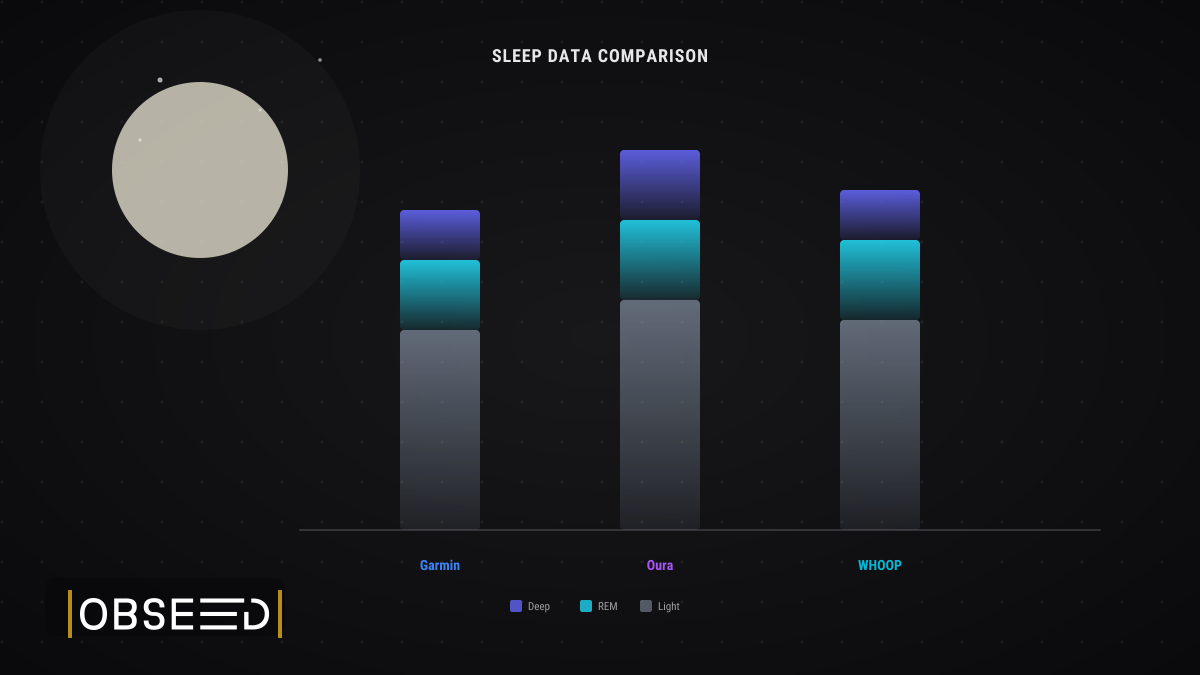
Garmin vs Oura vs WHOOP: Which Gives You Better Sleep Data?
A detailed comparison of sleep tracking accuracy and metrics across Garmin, Oura Ring, and WHOOP. Learn which device gives the most useful sleep insights for endurance athletes.
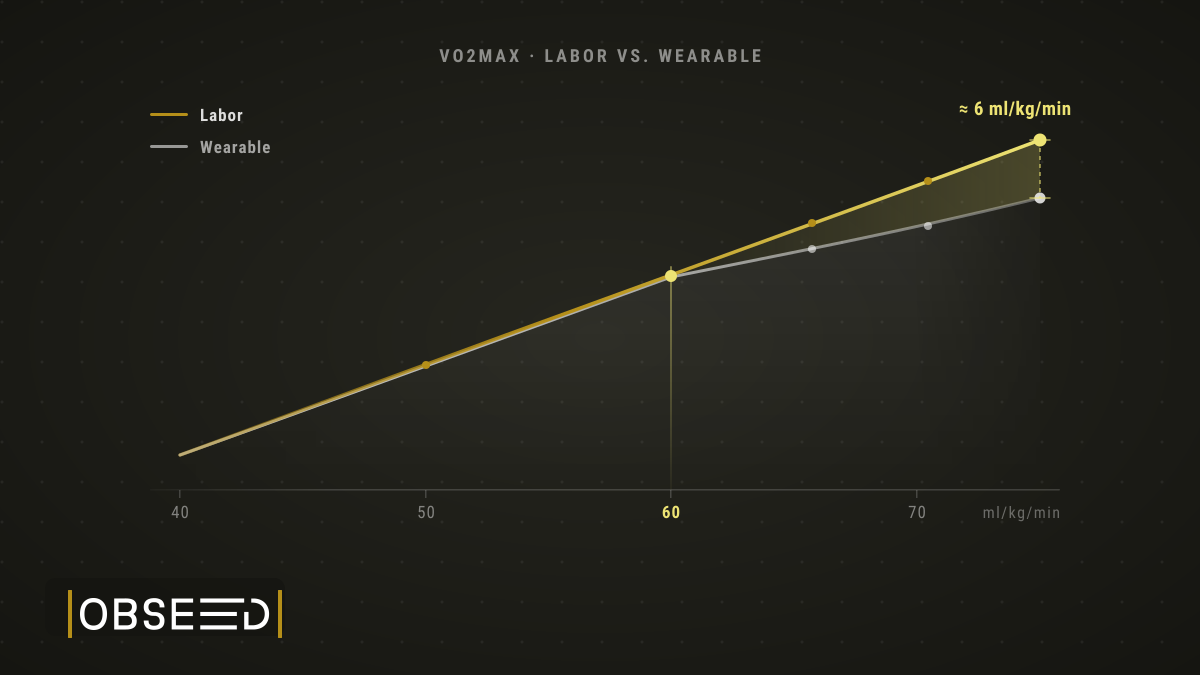
Lab or Wearable, That Is the Question: How Do I Know My VO2max Is Right?
A watch does not measure your VO2max, it estimates it. Why that estimate is surprisingly good for recreational athletes, and why it misses for the very best.
