Garmin vs Oura vs WHOOP: Which Gives You Better Sleep Data?
Sleep tracking accuracy and metrics of Garmin, Oura Ring, and WHOOP compared. Which device gives endurance athletes the most useful sleep insights?

You train five days a week. You track every interval, every heart rate zone, every elevation gain. But when it comes to sleep (the phase where adaptation actually happens), you’re stuck staring at a single score from a single device. And you’re wondering: is this number even accurate?
It’s a fair question. The Oura Ring achieved 91.8% sleep staging accuracy against polysomnography in a clinical validation study (Sleep Medicine / PubMed, 2024). Garmin and WHOOP publish their own validation numbers. But accuracy is only half the story. What metrics each device reports, how it handles naps, and whether it connects sleep to your training load: that’s where the real differences appear.
This guide breaks down Garmin, Oura, and WHOOP sensor by sensor, metric by metric. No single device wins every category. And if you already own more than one, there’s a way to combine them.
Related: how seasonal sleep patterns shift your baseline, and why that matters for device comparisons.
Why Sleep Data Quality Matters for Athletes
Sleep is where your body converts training stress into fitness gains. A meta-analysis of 78 studies found that sleep deprivation reduced endurance performance by 2.9% and time to exhaustion by 10.4% (Sports Medicine, 2022). For competitive athletes, those margins decide races.
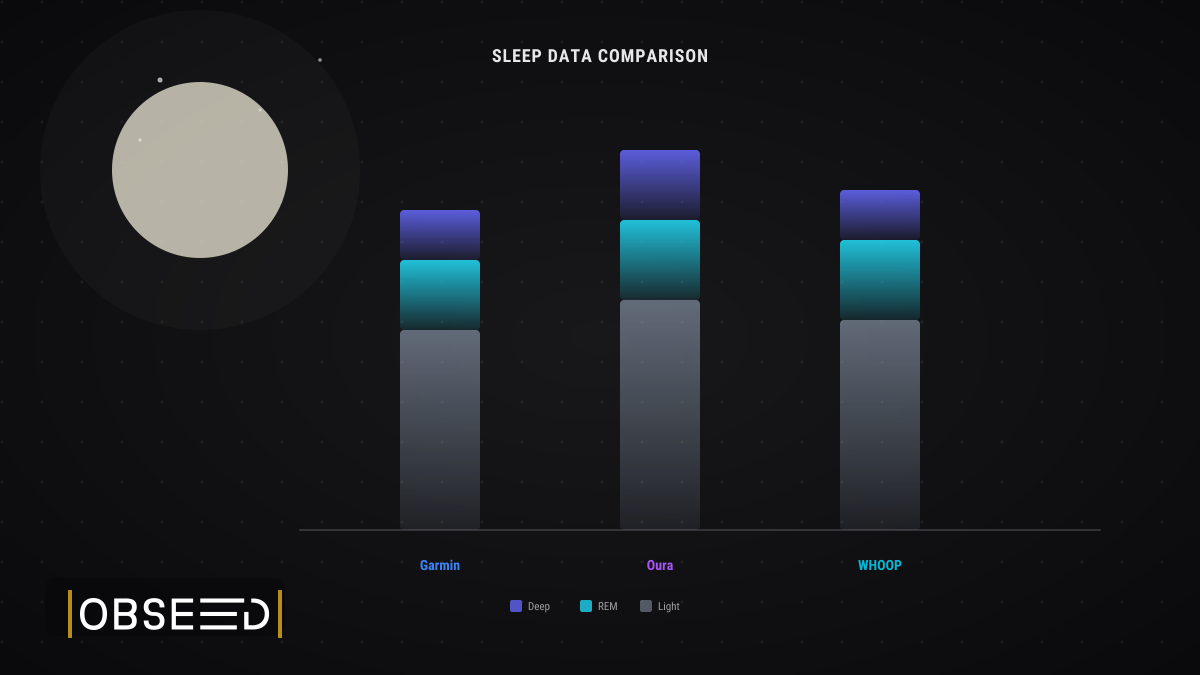
But tracking sleep isn’t as straightforward as tracking a run. Your GPS watch records distance with meter-level precision. Sleep staging, by contrast, relies on indirect signals: wrist movement, skin temperature, heart rate patterns. Every device interprets those signals differently. We’ve worn all three devices simultaneously during training blocks and seen nights where Garmin reports 45 minutes of deep sleep while Oura reports 90 minutes for the same night. Which one do you believe? That inconsistency is exactly why understanding how each device works matters before you trust any single number.
Garmin Sleep Tracking
Garmin uses wrist-based optical heart rate (PPG) and a 3-axis accelerometer. Its Firstbeat Analytics engine estimates sleep stages by analyzing heart rate variability patterns combined with movement data. Starting with the Fenix 7 and Forerunner 265 series, Garmin also factors in Pulse Ox (SpO2) readings when enabled.
Garmin’s reported metrics
Garmin provides sleep duration, sleep stages (light, deep, REM, awake), a Sleep Score out of 100, Body Battery integration, and overnight HRV status. The Sleep Score weighs duration, depth, and restfulness. Body Battery connects sleep recovery to daily energy expenditure, a feature unique to Garmin’s ecosystem.
Where Garmin shines
Garmin’s biggest advantage is context. It’s likely already on your wrist during training, so it can connect last night’s sleep to today’s training readiness. The Training Readiness score pulls from sleep, HRV, stress, and recent training load, giving athletes a single view that spans workout and recovery.
Where Garmin falls short
Garmin’s sleep detection can struggle with quiet wakefulness. Lying in bed reading often gets classified as light sleep. And because the sensor sits on the wrist rather than the finger, its PPG signal is more susceptible to motion artifacts during restless nights.
Garmin watches use Firstbeat Analytics to derive sleep stages from wrist-based heart rate variability and accelerometer data. Their Training Readiness feature uniquely connects sleep quality to training load, though wrist-based PPG sensors are more prone to motion artifacts than finger-based alternatives like Oura.
Oura Ring Sleep Tracking
The Oura Ring (Gen 3 and Gen 4) uses infrared PPG sensors on the underside of the finger, a 3D accelerometer, and skin temperature sensors. The finger location provides a stronger arterial pulse signal than the wrist, which is one reason clinical studies rate its accuracy highly.
Oura’s reported metrics
Oura reports sleep duration, sleep stages (light, deep, REM, awake), Sleep Score, Readiness Score, overnight HRV, resting heart rate, skin temperature deviation, blood oxygen (SpO2), and sleep timing regularity. It also tracks sleep latency (how long it takes you to fall asleep) and sleep efficiency as a percentage.
Where Oura shines
Accuracy. Brigham and Women’s Hospital compared consumer sleep trackers against polysomnography and ranked Oura the most accurate, outperforming Apple Watch by approximately 5% and Fitbit by roughly 10% in sleep staging agreement (MDPI Sensors, 2024). The temperature trend data is also valuable for spotting illness or hormonal shifts before other symptoms appear.
Where Oura falls short
Oura doesn’t track daytime activity with the same depth as a sports watch. It knows you moved, but it doesn’t know your pace, power, or route. Its Readiness Score is recovery-focused: helpful, but disconnected from structured training plans. Athletes who want their sleep data to talk to their training data won’t get that from Oura alone.
The Oura Ring achieved 91.8% sleep staging accuracy in a clinical validation study at the University of Tokyo (Sleep Medicine / PubMed, 2024), making it the most accurate consumer sleep tracker tested against polysomnography. Its finger-based PPG sensor captures a stronger arterial signal than wrist-worn alternatives.
WHOOP Sleep Tracking
WHOOP uses a wrist-worn PPG sensor (5 LEDs across multiple wavelengths), a 3-axis accelerometer, skin temperature sensor, and SpO2 monitoring. Unlike Garmin and Oura, WHOOP has no screen; it’s designed purely as a data collection device. Its algorithms are built around the concept of strain and recovery.
WHOOP’s reported metrics
WHOOP provides sleep duration, sleep stages, Sleep Performance percentage (actual vs. needed), Recovery Score (0-100), respiratory rate, HRV (measured during the deepest period of sleep, called SWS HRV), resting heart rate, skin temperature, and SpO2. Its “Sleep Coach” feature recommends how many hours you need based on accumulated strain.
Where WHOOP shines
WHOOP’s Sleep Coach is genuinely useful for athletes. Rather than just scoring last night, it tells you how much sleep you need tonight based on your training load. The strain-recovery loop is its core philosophy: train hard, recover proportionally. For athletes who push into overreaching phases, that feedback loop is a safeguard.
Where WHOOP falls short
WHOOP requires a monthly subscription, which makes it the most expensive option over time. It also lacks a display, so you can’t glance at data without your phone. And while its recovery algorithm is strong, WHOOP doesn’t offer the same granularity in sleep staging validation as Oura’s peer-reviewed clinical studies.
WHOOP’s Sleep Coach calculates personalized sleep need based on accumulated daily strain, making it uniquely suited for athletes managing high training loads. Its subscription model and lack of display differentiate it from Garmin and Oura, prioritizing continuous background monitoring over on-wrist feedback.
Head-to-Head Comparison
Each device approaches sleep tracking from a different angle. Garmin connects sleep to training. Oura prioritizes measurement precision. WHOOP builds everything around the strain-recovery cycle. The table below lays out the key differences.
| Feature | Garmin | Oura Ring | WHOOP |
|---|---|---|---|
| Sensor location | Wrist | Finger | Wrist |
| Sleep stages | Light, Deep, REM, Awake | Light, Deep, REM, Awake | Light, Deep, REM, Awake |
| Sleep Score | Yes (0-100) | Yes (0-100) | Sleep Performance % |
| HRV tracking | Overnight status | Overnight continuous | SWS-period HRV |
| Skin temperature | Select models | Yes | Yes |
| SpO2 | Yes (select models) | Yes | Yes |
| Sleep need estimate | No | Optimal bedtime window | Sleep Coach (strain-based) |
| Training integration | Training Readiness, Body Battery | Readiness Score (limited) | Strain-Recovery loop |
| Nap detection | Manual | Automatic | Automatic |
| Display | Yes | No | No |
| Cost model | One-time purchase | One-time + optional subscription | Subscription required |
| Clinical validation | Internal (Firstbeat) | Peer-reviewed (PubMed) | Internal studies |
Notice something? No single column wins every row. Garmin dominates training integration. Oura leads in sensor accuracy and clinical validation. WHOOP offers the smartest sleep prescription. Choosing one means accepting trade-offs in the others.
If you own two of these devices, the data sits in two separate apps. Your Oura sleep stages don’t talk to your Garmin Training Readiness. Your WHOOP Recovery score doesn’t factor in your Oura temperature trends.
Combining Sleep Data from Multiple Devices
This is where most athletes hit a wall. You’ve got great data in three apps, but no way to see it together. Exporting CSVs and building spreadsheets works for a weekend project. It doesn’t work for daily decision-making across a training season. That’s the problem obseed was built to solve. When you connect Garmin, Oura, and WHOOP to obseed, their sleep data appears side by side: same night, same timeline. You can compare Oura’s deep sleep estimate against Garmin’s for the same night and spot where they agree (and where they don’t).
More importantly, obseed connects sleep data to your seasonal patterns and training context. Tag a late meal in Oura, and obseed correlates it with your deep sleep duration from all connected devices. Finish a high-intensity interval session on your Garmin, and obseed shows how your WHOOP Recovery and Oura Readiness responded the next morning.
Sleep is only one piece of the recovery puzzle. See how these same devices compare for HRV tracking, and learn how to turn HRV data into concrete training decisions.
Choosing the Right Device for Sleep Tracking
The right choice depends on what you already own and what matters most to you. Here’s a practical breakdown by use case.
You’re a runner or cyclist who trains with a Garmin watch
Stick with Garmin for sleep. You already have the hardware, and the Training Readiness integration is valuable. Consider adding an Oura Ring for higher-accuracy sleep staging and temperature trends, then connect both to obseed.
You care most about sleep quality and recovery
Start with the Oura Ring. Its clinical validation and temperature tracking make it the strongest standalone sleep device. If you train seriously, pair it with whatever GPS watch fits your sport.
You need accountability for sleep during heavy training blocks
WHOOP’s Sleep Coach is built for this. It tells you exactly how much sleep you owe yourself after a hard day. The subscription cost stings, but the strain-based sleep prescriptions are unique.
You already own multiple devices
Connect them all. The value isn’t in choosing one; it’s in triangulating. When Garmin, Oura, and WHOOP all show the same pattern, you’ve found a real signal.
Frequently Asked Questions
Is the Oura Ring more accurate than Garmin for sleep?
In clinical testing, yes. The Oura Ring achieved 91.8% sleep staging agreement with polysomnography (Sleep Medicine / PubMed, 2024), and Brigham and Women’s Hospital ranked it the most accurate consumer tracker tested (MDPI Sensors, 2024). Garmin’s Firstbeat-based algorithm has not undergone the same level of independent peer-reviewed validation. Finger-based PPG sensors generally capture a cleaner signal than wrist-based ones.
Does WHOOP track sleep stages like Garmin and Oura?
Yes. WHOOP reports light, deep, REM, and awake stages. Its differentiator isn’t sleep staging. It’s the Sleep Coach, which calculates your personal sleep need based on accumulated physical strain. Neither Garmin nor Oura offer a strain-adjusted sleep prescription.
Can I use Garmin and Oura at the same time?
Absolutely. Many endurance athletes wear a Garmin watch during training and an Oura Ring around the clock. The devices don’t interfere with each other. The challenge is that each stores data in its own app, which is why platforms like obseed exist: to merge the data into a single timeline.
Which device is best for HRV tracking during sleep?
All three track HRV during sleep, but they measure it differently. Oura tracks HRV continuously throughout the night. WHOOP calculates HRV during the slow-wave sleep period specifically. Garmin reports an overnight HRV status averaged across the sleep session. For trend tracking over weeks and months, any of them works; consistency matters more than absolute values.
Is WHOOP worth the subscription cost?
That depends on how you’ll use the data. WHOOP costs roughly $30/month, which adds up over a training year. If you rely heavily on the Sleep Coach and strain-recovery feedback loop, the subscription delivers ongoing value. If you mostly want sleep staging data, the Oura Ring or your existing Garmin watch covers that without recurring fees.
Read Next
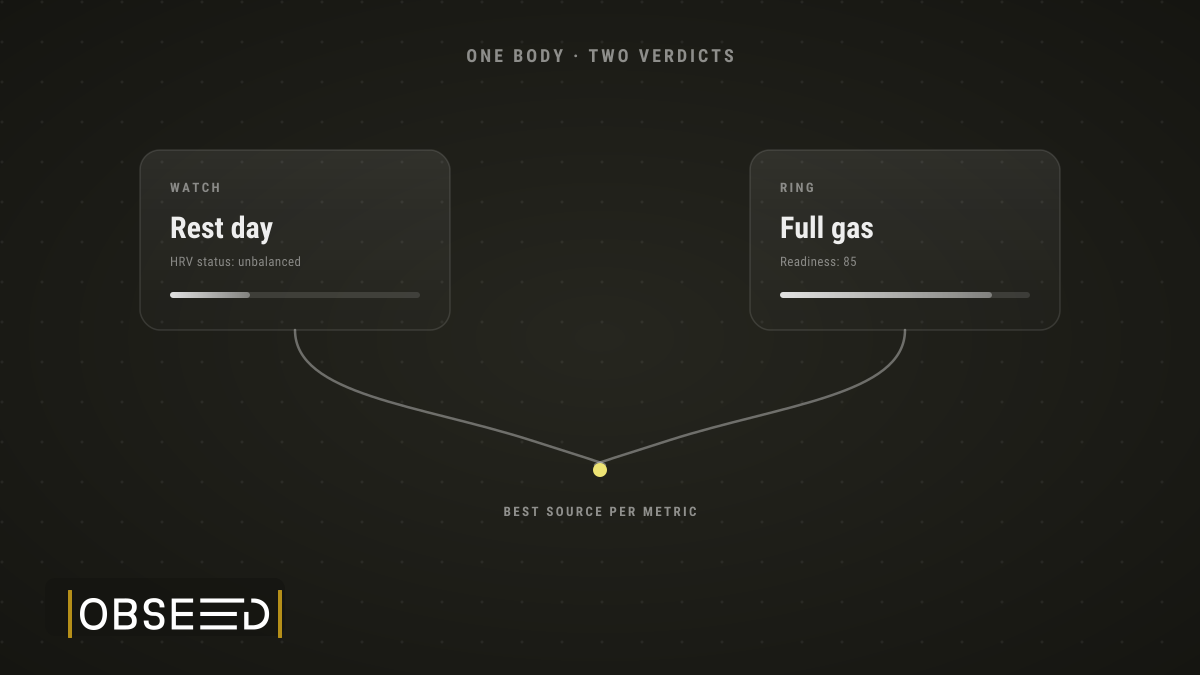
The Tracker Tango in the Data Jungle: Which Device Should I Believe?
Whoop says rest day, Garmin says threshold training. Why wearables contradict each other, and why your measurement method matters more than who is right.

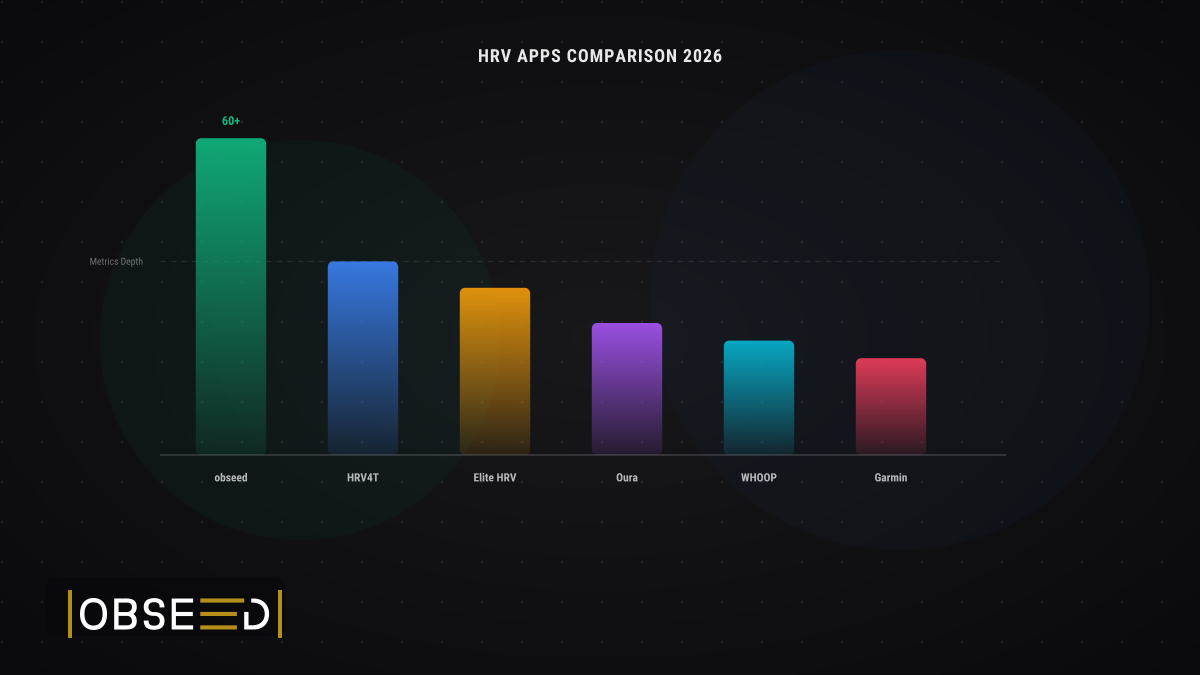
The Best HRV Apps for Endurance Athletes (2026 Comparison)
Comparing HRV apps for runners, cyclists, and triathletes: how obseed, HRV4Training, Elite HRV, WHOOP, and Garmin Connect stack up on metrics and value.

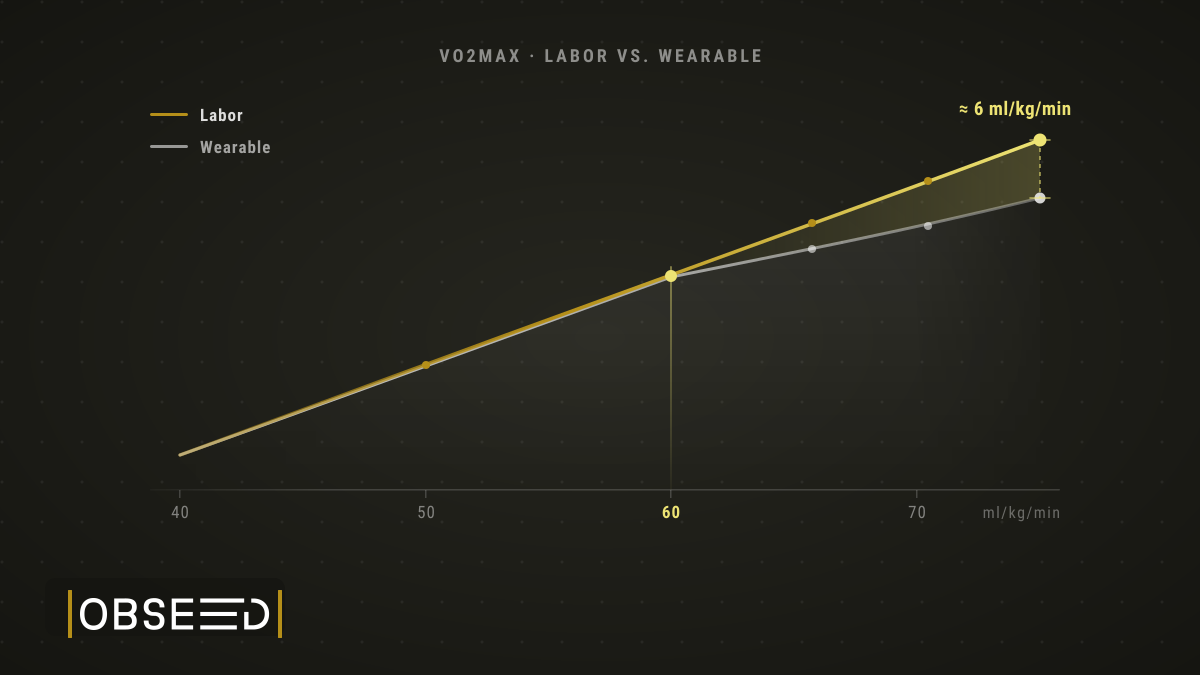
Lab or Wearable, That Is the Question: How Do I Know My VO2max Is Right?
A watch does not measure your VO2max, it estimates it. Why that estimate is surprisingly good for recreational athletes and misses for the very best.