How Seasons Shape Our Sleep: Patterns From 37,000 Nights of Community Data
37,679 sleep records show: 17 minutes less sleep in summer, a bedtime paradox, and the surprising link between training and deep sleep.

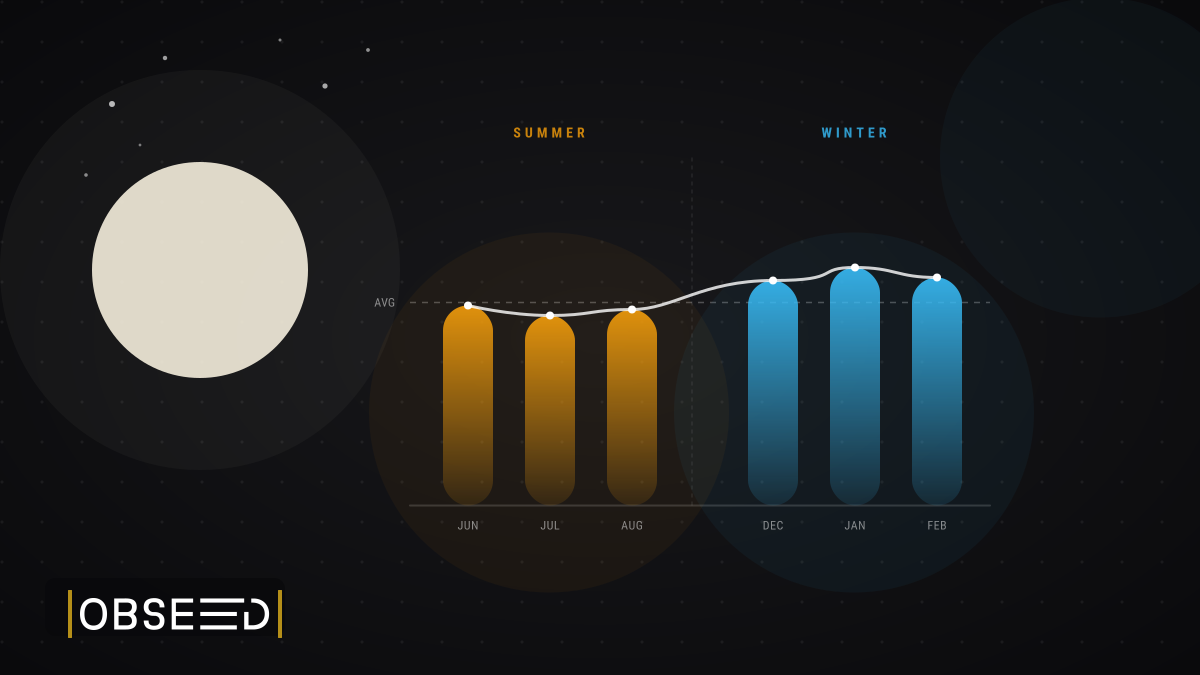
At obseed, we’re launching a new series where we uncover the hidden patterns in our community data. For the first edition, we focused on the year 2025, analyzing 37,679 nights of sleep and thousands of sport sessions. We want to see how the seasons affect our recovery and the connections between sleep and sport behavior.
What emerged was a clear, surprisingly consistent seasonal rhythm that runs through nearly every metric.
The Wake-up Shift
Let’s start the day with waking up: until when does our community actually sleep?
Wake-up Time
When you wake up
Source: obseed community sleep logs, 2025. Values show deviation from the average wake-up time (06:50).
Generally, we see a clear seasonal rhythm: in summer, our community gets out of bed much earlier, while in winter, wake-up times are later.
From April to August, we see a very consistent “early bird” plateau, where the alarm goes off around 6:30. Of course, it helps when we can greet the sun already in the morning. Still, it’s impressive how stable this rhythm remains over the summer months.
As the year draws to a close, however, the wake-up time shifts significantly backward. In December, the month with the latest wake-up times, the alarm rings on average only at 7:30, a full hour later than in summer. This is a massive shift that shows how strongly the seasons can influence our sleep. It’s notable that in the colder half of the year, wake-up times show a clear outlier to the back, while they remain relatively stable in the warmer half. What makes December so special? We think it’s a combination of shorter days, colder weather, and the holiday season, which allows us to stay in bed longer. It’s a month when the temptation is particularly strong to crawl under the warm blanket.
The Summer Squeeze
When we wake up earlier and our obligations don’t move with us, something has to give. And we see that in sleep duration.
Sleep Duration
Average monthly sleep duration
Source: obseed community sleep logs, 2025. Values show total sleep duration per month.
Sleep duration drops from a winter plateau of around 7 hours 20 minutes (October to March) to just 7 hours 3 minutes in June. A deficit of 17 minutes at the trough is not a gradual decline, but a wall.
The longest days of the year bring the latest sunsets, which delays melatonin production and pushes our internal clock backward. But the alarm clock remains fixed. The result? A real summer squeeze, where the community loses almost 20 minutes of sleep in June, and that every day. It’s as if nature is playing a trick on us: it lengthens the days, but not the nights.
Inside the Summer Night
This is what surprised us most: although the community sleeps 18 minutes less in summer, they actually get slightly more deep sleep.
Sleep Stages
Monthly sleep stage distribution
Source: obseed community sleep logs, 2025. Values show the average duration per sleep phase (in minutes).
In June, average deep sleep reaches 77 minutes, compared to 72 minutes in January. We see the price for this in REM sleep: it drops from 79 to 73 minutes. When we take 18 minutes of sleep away from the body, it prioritizes recovery. Deep sleep is the phase in which our body physically regenerates, while REM sleep is more about cognitive processing and emotional recovery.
This is no coincidence, because during these months our community is particularly active in training.
Train Hard, Sleep Deep
Sport volume vs. deep sleep duration
Source: obseed community sleep and sport logs, 2025. Training-intensive months correlate with more deep sleep and less REM sleep.
We see this more explicitly in this graphic. During the training-intensive months from April to August, deep sleep moves almost in step with sport volume. The more we train, the more our body demands deep recovery. In the quieter winter months, the balance tilts back toward REM-heavy nights. In both spring and autumn, however, this change does not happen from one day to the next; there is a transition phase in which the sleep architecture slowly adapts to the new requirements.
The Bedtime Paradox
Let’s focus now on bedtime. If the wake-up time in summer is significantly earlier, one would expect the bedtime to be correspondingly earlier to protect sleep duration. It’s dark, cold, and there isn’t that much to do late in the evening anyway? But that’s not the case; the data says exactly the opposite.
Bedtime
When you fall asleep
Source: obseed community sleep logs, 2025. Values show the deviation from the average bedtime (23:01).
Most people fall asleep latest in November (23:23) and December (23:31). Almost half an hour above the annual average. Without the pressure of an early training session or a competition calendar, routines drift off into the night.
It is also interesting that the bedtime shifts backward creeping but almost constantly from April into December. While at the beginning of the year the bedtime still moves rapidly towards the minimum (a kind of “April discipline”), the good resolution from the start of the training season is quickly lost.
Even in June, despite endless twilight, the bedtime is a relatively early 22:49. Physical exhaustion from peak training volume acts as a stronger sleep signal than the late-setting sun.
The Sunlight Equalizer
“Social Jetlag” measures the difference between wake-up times on workdays and at the weekend. A large difference signals that our social clock does not match our biological one.
Social Jetlag
Workday vs. weekend wake-up times
Source: obseed community sleep logs, 2025. Comparison of average wake-up times on workdays vs. weekends.
In February, the community’s social jetlag reaches its peak with one hour and 14 minutes. By June, it shrinks to 37 minutes. One might think that the sleep rhythm in summer is therefore more consistent and recovery is better. Unfortunately, we know from before that June is the month with the shortest sleep duration.
Are we perhaps seeing first signs of “Weekend Warriors” here? By this we mean everyone who increasingly does intense and long sports at the weekend. Where working days start too early, but weekends are filled with long training sessions, social jetlag can actually be a general indicator of unhealthy recovery.
The Sleep-Sport Feedback Loop
The correlation between wake-up time and sport volume is remarkably close over the entire year, especially in the summer months.
The Seasonal Early Bird Shift
Wake-up time vs. sport volume
Source: obseed community sleep and sport logs, 2025. Earlier wake-up times and increasing sport volume move almost in parallel.
Together with brighter mornings and longer days, the sport volume increases significantly, while our community gets up earlier. Note: In the graphic, the wake-up time (red) is shown inverted so that it can be better compared with the sport volume (blue).
And as often in the previous graphics, December is an exception again. The sport volume remains constant, but the wake-up time shifts significantly backward. It’s holiday time, the year is coming to an end, and the motivation for early training fades.
But also what the community trains shifts with the seasons.
Seasonal Sport Specialization
Activity volume indexed to annual average
Source: obseed community sport logs, 2025. Values indexed to the respective annual average (100%). Outdoor sports show high seasonality; indoor sports remain stable.
In this graphic, we have indexed the monthly volume for the five most popular sports so that the seasonal fluctuations become more visible. This means we don’t show the absolute hours, but how the sport behaves compared to the annual average.
While strength training, yoga, and swimming remain relatively constant, we see a clear seasonality in cycling and running. Although there is a general decrease in sport activity in autumn and winter, the fluctuations in cycling and running are particularly pronounced.
While cycling is significantly below the annual average, especially in late autumn and winter, it explodes in summer and reaches over double the winter values. So we see that the indoor bike (and the treadmill) cannot fully replace the outdoor season.
But what does our community have against swimming in September and October? We see a dramatic slump in late summer that lasts until October. Is it the outdoor pools that close in September? Or perhaps the cooler temperatures that make swimming outdoors unattractive? Or does our community like to spend their autumn holidays by the sea, where swimming is more for relaxation?
The Weekend Warrior Pulse
We have already hinted at it: there is a rhythm that is not based on the seasons, but on the days of the week.
The Weekend Warrior Recovery Cycle
Sport volume vs. sleep duration by day of week
Source: obseed community sleep and sport logs, 2025. Saturday and Sunday show a synchronized peak in sport and sleep.
At the weekend we see very clearly: we sleep on average about 20 minutes longer than on workdays. At the same time, the sport volume is also about a third higher than on workdays. The community steps on the gas at the weekend and recovers with longer nights.
We checked: this pattern persists stubbornly throughout the year and is therefore perhaps the most fundamental rhythm in the data.
What this means for you
The data tells a story of constant negotiation between our body, the sun, and our schedules. Some patterns stand out:
- The summer squeeze is real. If you train hard during the long June days, pay special attention to protecting your sleep window. Even 17 minutes add up over a month.
- Your body adapts. More training doesn’t simply mean less sleep, but different sleep. The shift to deep sleep in training-intensive months is your body’s response to the strain.
- Routine is your anchor. The tightest, most consistent schedules are seen in spring and summer, when light and training goals coincide. The winter drift is a signal to be more conscious of bedtime.
- Weekend is also recovery. The synchronized increase in sport and sleep at the weekend shows that many of us use these days to push ourselves and at the same time regenerate. Plan enough recovery if you train intensively at the weekend.
This is the first part of a series of data insights from the obseed community. Next time, we’ll look at how training load and recovery metrics interplay across the seasons.
Read Next
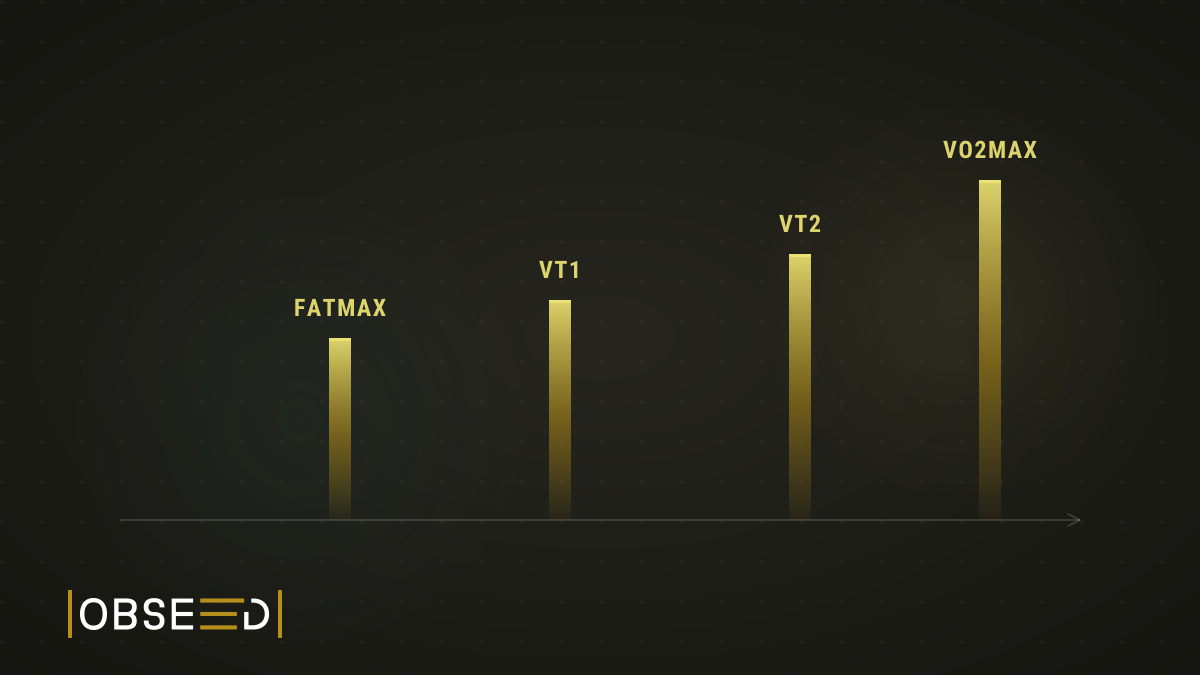
Thresholds and Maximum Values: The Who's Who of Diagnostics
VO2max only tells you what would theoretically be possible, not what your body actually uses of it. And when it comes to pinning down your second lactate threshold, not even the 72 recognised models can agree.

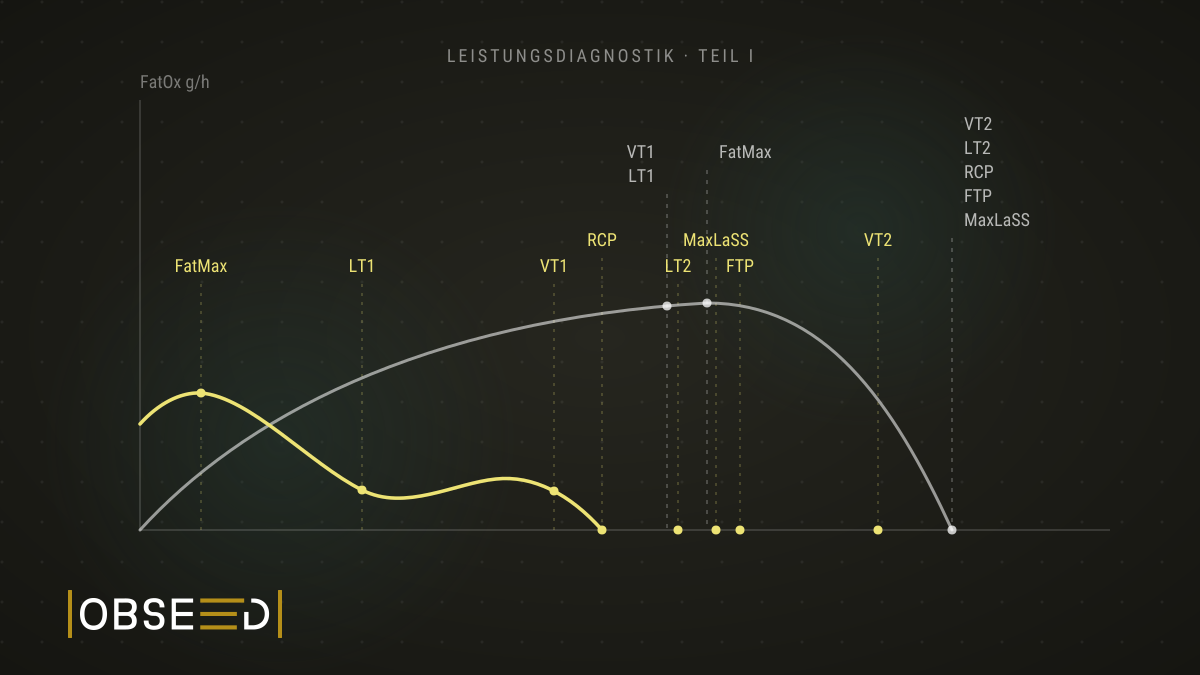
Performance Test vs. Diagnostic: What Is the Difference?
A test shows you WHAT a body can do. A diagnostic shows you HOW it does it. Why that difference decides whether your Zone 2 is actually a Zone 2.
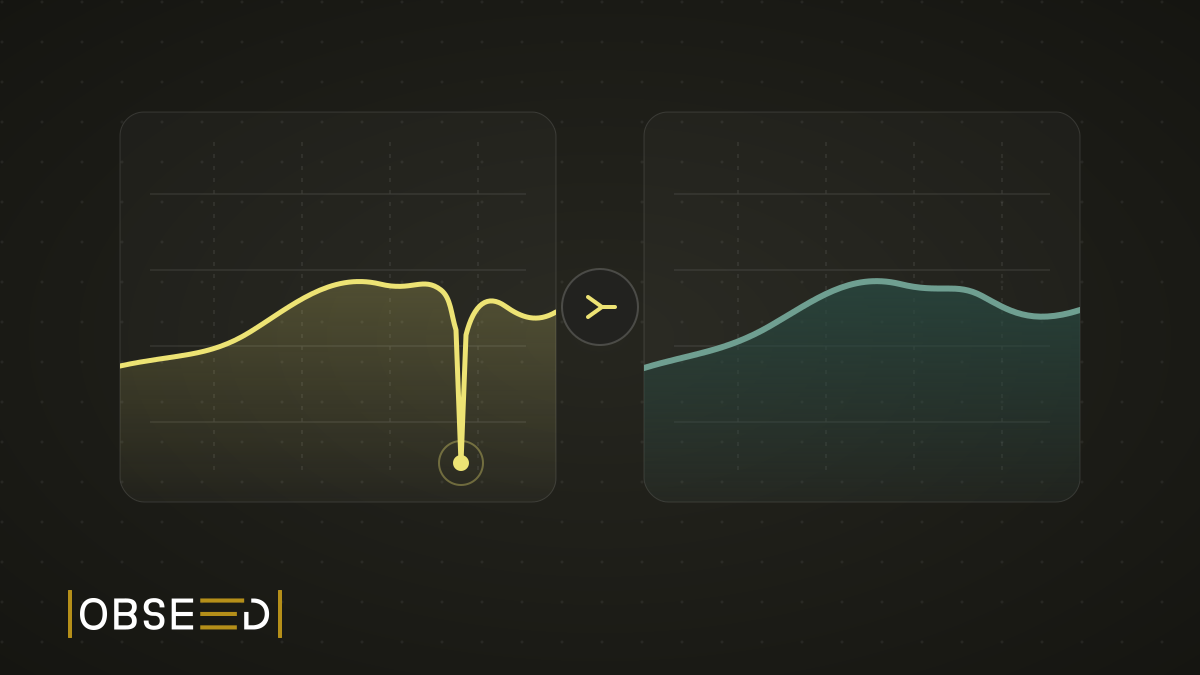
New Feature: The Mountain That Never Happened
My watch went for a swim in a fountain and invented roughly 100 metres of climbing. obseed now corrects errors like this automatically, including in your old sessions.
