Measure Twice: Understanding Heart Rate Variability and Using It Right
What HRV really measures, why your nervous system sets the tempo, and why twenty seconds before you hit start decide the data quality of an entire session.

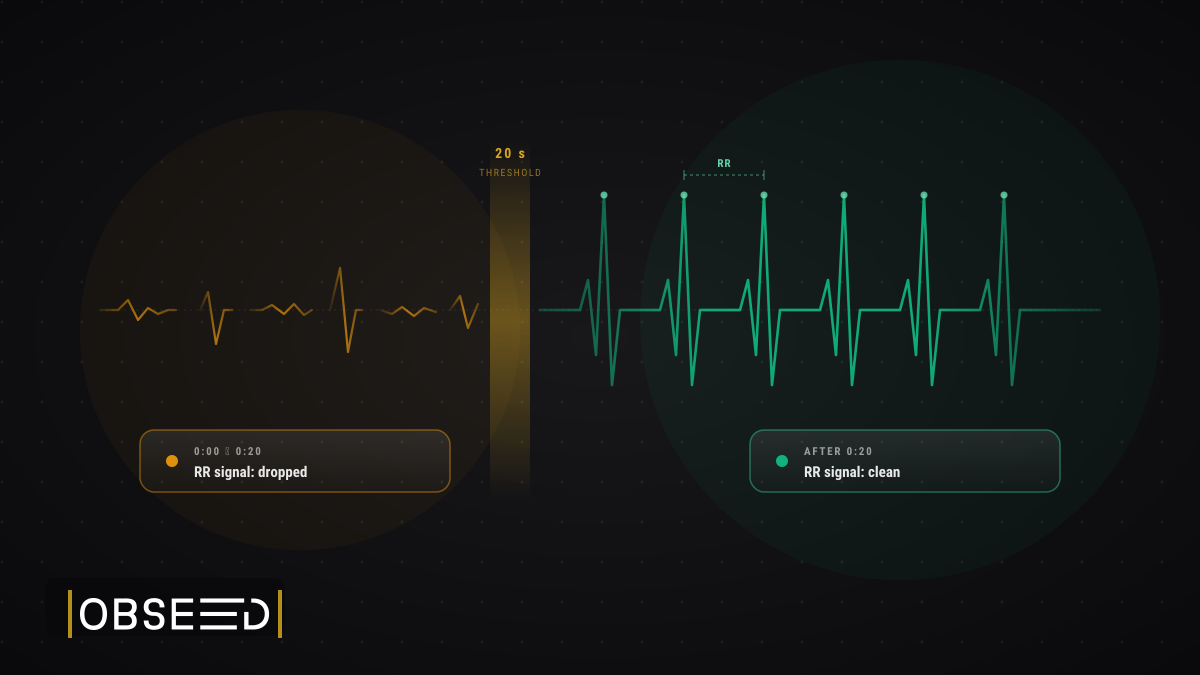
Measuring heart rate during sport has become so normal that it’s hard to picture a run or a ride without it. Whether it’s a chest strap, an armband, or the watch straight on your wrist: anyone who wants to can now track their pulse around the clock, well beyond training, with very little effort.
That opens up possibilities we didn’t have until recently: all of a sudden resting heart rate isn’t just a number you take in the morning right after waking, but a curve too, one that shows how your heart worked through the whole night.
And now the floodgates are open. At breakneck speed, things like sleep stages, recovery scores and efficiency get catapulted into our daily lives. It’s hard to go without, and the watches that were once meant to help us steer our training turn into small, constant companions that grade our entire day.
Make of that what you will. But it’s hard to deny that this exact around-the-clock recording of body and vital data has already delivered an immense, preventive benefit in more than a few cases.
One value in particular is moving to the front: heart rate variability, HRV for short.
It’s been researched for a long time, and in sport there are already several ways to fold it into training. But: what is it, actually?
The term describes itself. Put simply, HRV tells us how regularly, or rather how irregularly, our heart beats. And the general rule is: the more irregular, the better.
…come again?
Our heart is what’s called an involuntary muscle. Meaning: we can’t tense and relax it at will. It works on its own and goes about its job, hopefully, with full efficiency.
That brings us to two more questions: what is the heart’s job, and what does efficiency mean here?
Both are easy to answer: the heart is there to supply the body with energy. By moving blood through the body, it carries oxygen into even the most remote corners of your extremities. Across roughly 40’000 km of capillaries, that can be quite the effort, especially when we’re exercising.
That’s the crux: efficiency here means the heart works exactly as hard as it needs to, no more.
That need is governed by our autonomic nervous system, specifically the sympathetic and the parasympathetic branch. The names can mislead, though: the sympathetic system kicks in when the body is under stress, while the parasympathetic takes over when we relax and recover.
So the heart has to move more energy, in the form of oxygen, at some moments and less at others. Even simpler: it has to move more blood at some moments and less at others.
It can do that in two ways: it can either increase the volume of each beat or, when that alone isn’t enough, raise the frequency at which that volume gets moved. (What follows from that is a topic all of its own.)
Back to the nerves: the more active our sympathetic system, the greater the demand for energy. So our heart has to deliver more. During sport it’s obvious: you move, the pulse climbs, the energy arrives where it’s needed, and at the pace you need it.
At rest it’s no different, except now something else comes into play: the heart, self-governing as it is, is still a muscle, and it needs recovery too. So the heart tries to deliver energy on demand. Which means it beats when it’s genuinely necessary.
Even more simply put: the more relaxed we are, the more irregular our heartbeat.
So our heart might beat only 60 times a minute, but how regularly it does that tells us whether we’re truly recovering or whether we’re still stressed.
The difference between low (left) and high variability: both heart rates sit at 60 bpm. On the right, recovery is happening; on the left, it’s stress.
Why don’t we feel it?
For the same reason it takes a moment to feel pain when you touch a hot stovetop: our brain needs a little while to register the signals. HRV is measured on a scale of milliseconds, a thousandth of a second. We simply don’t notice it.
…unlike our sports watches
For a while now, most watches have been able to measure exactly this variability. Not just at rest, but during training too. In short: used correctly, our sports watches could show us directly whether a session was restful, taxing, or too stressful. And more than that: you could, in theory, even pinpoint the moment a session stopped building you up and only started wearing you down…
IF the corresponding data were actually there. And that’s rarely down to the watch itself: the problem hides in how the gear is handled.
Let’s leave the details aside and go straight to the practical part, because in the end it’s twenty, maybe thirty seconds that make the difference. Here’s what you need:
- A sports watch or a bike computer
- A chest strap (this part is non-negotiable) like the Garmin HRM Pro or Polar H10.
If you’re on a Garmin watch, one quick check pays off: HRV recording (“Save HRV”) is disabled by default on many models. Our Garmin HRV activation guide shows you where to switch it on, because without that setting no chest strap in the world will get you RR data.
Then the sequence is what matters:
- Wet the chest strap for better signal transmission (dampen it, don’t drown it)
- Start the watch / computer
- Wait until both the chest strap and GPS are connected
- Start the activity
And that’s the whole trick.
So what do we get out of it?
If our nervous system determines how our heart works, we can use the measurement of that very work to figure out, in reverse, which part of our nervous system is active right now. And that opens up a whole new world of training analysis.
This data can help us understand performance-diagnostic values better, validate training progress, or explain the plateaus. In one stroke, the focus shifts away from pure performance and energy output toward the actual, biological functions at work.
That turns the analysis of every session into a health check too: Was I recovered enough? Did the session give me the stimulus I wanted? Why did I stop feeling good after 90 minutes? How long will my recovery take now?
All it takes is twenty to thirty seconds BEFORE you start training — and your obseed account.
Warmly, Fabian
Read Next
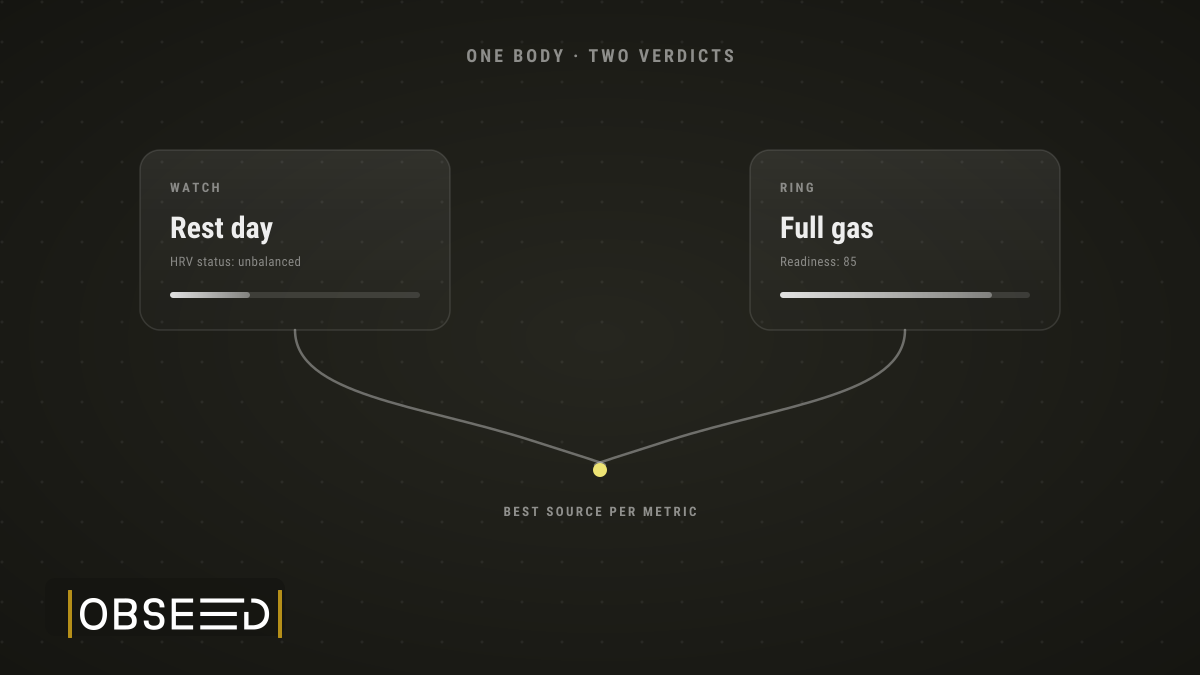
The Tracker Tango in the Data Jungle: Which Device Should I Believe?
Whoop says rest day, Garmin recommends threshold training. Why wearables contradict each other, and why picking your measurement method matters more than asking who is right.

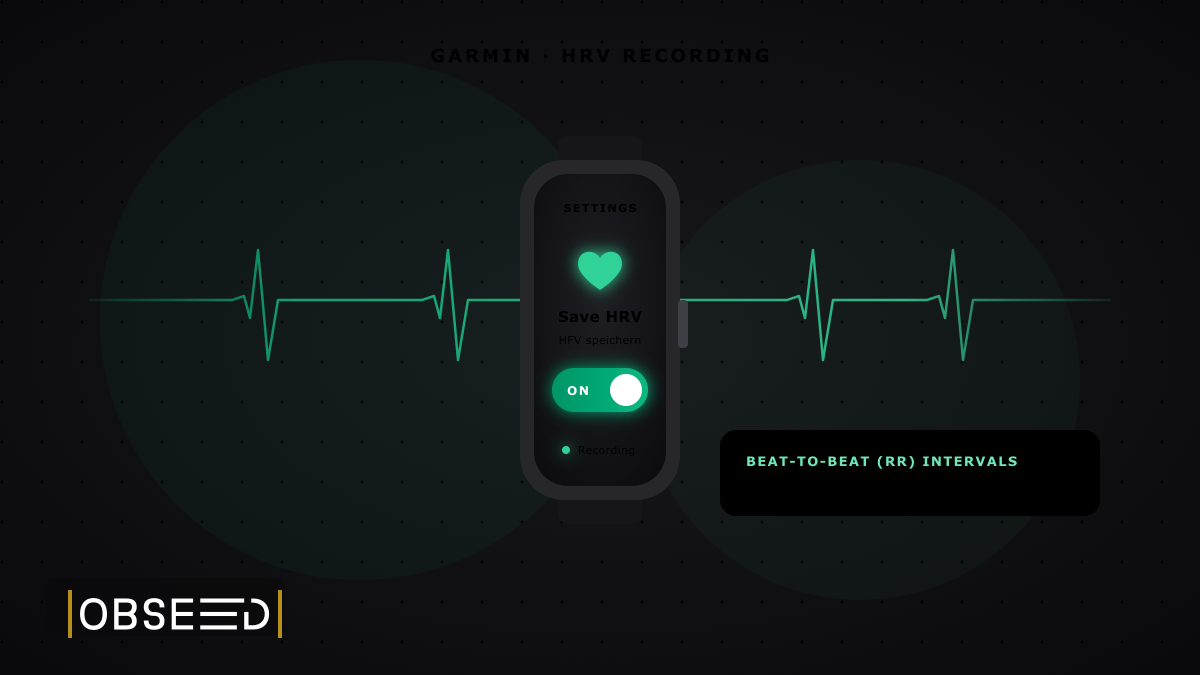
Garmin & HRV: Turn On Recording — and Re-Check It After Every Update
On many Garmin watches HRV recording is off by default and gets reset by firmware updates. Here is how to enable it so obseed can analyse your heart rate variability.
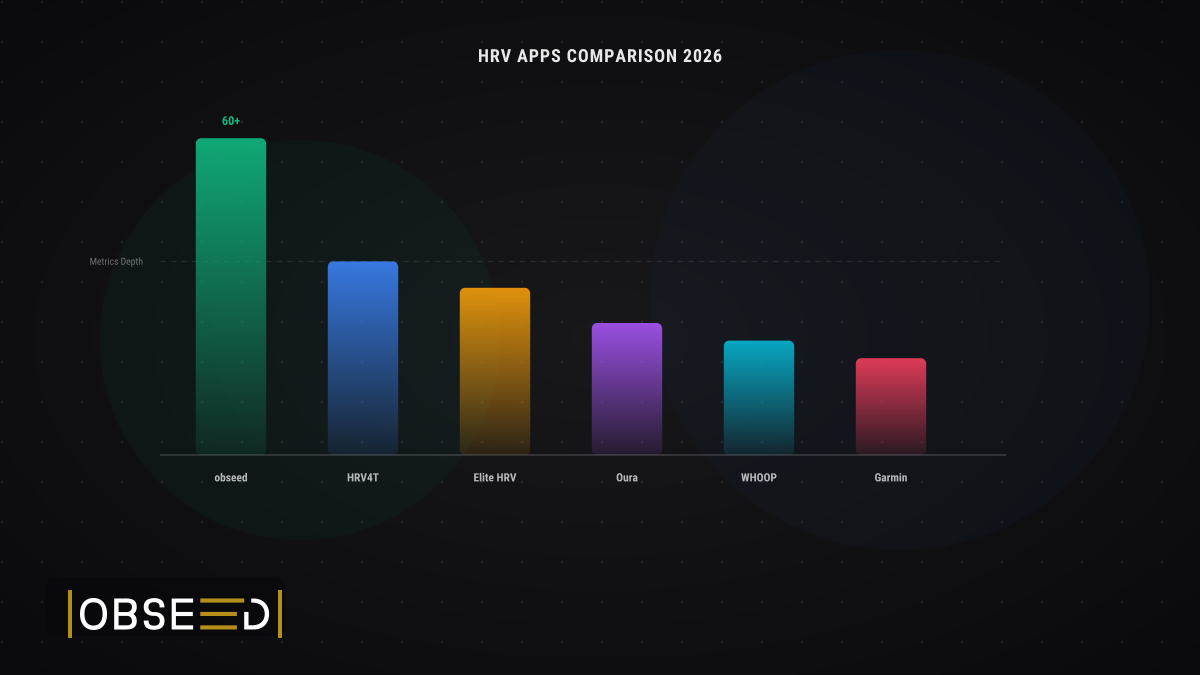
The Best HRV Apps for Endurance Athletes (2026 Comparison)
Comparing the top HRV apps for runners, cyclists, and triathletes. Oura Gen 3 hits 7.15% MAPE — see how obseed, HRV4Training, Elite HRV, WHOOP, and Garmin Connect stack up on metrics depth and value.
