How to Use HRV for Smarter Training Decisions
A practical guide to HRV-guided training: how to read your morning HRV, when to push hard vs rest, and how to avoid the most common mistakes.

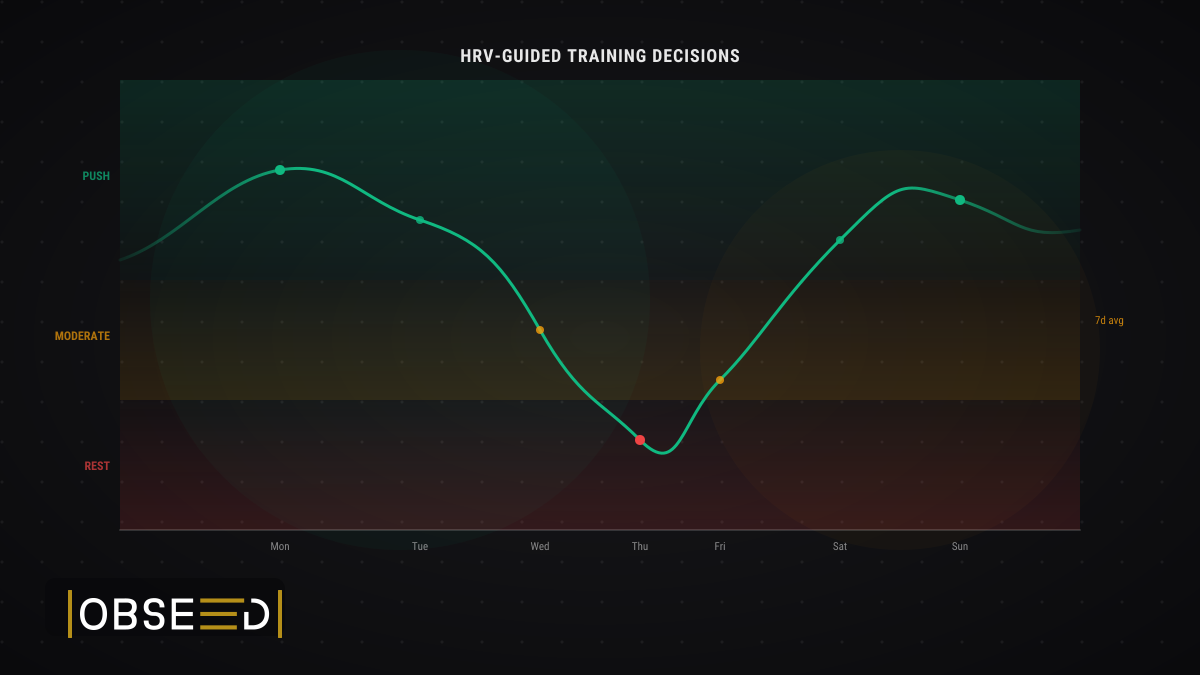
You crushed a long interval session on Tuesday. Wednesday morning, your heart rate variability drops below your personal baseline. Do you push through the planned tempo run, or swap it for recovery spin? Most athletes guess. HRV removes the guesswork.
HRV-guided training isn’t new in research labs, but it’s finally practical for everyday athletes. Wearables record the data. The missing piece has always been interpretation: understanding what your numbers actually mean before you lace up your shoes. This guide walks you through a concrete, repeatable system for using HRV to make better training decisions, from morning measurement to workout selection.
Already tracking HRV but unsure which app fits your sport? See our best HRV apps for endurance athletes comparison. If you’re on a Garmin watch, the prerequisite is making sure HRV recording is actually enabled. Our Garmin HRV setup guide walks you through it before you start.
What HRV Actually Tells You
Heart rate variability measures the time variation between consecutive heartbeats, not your heart rate itself. A higher HRV generally signals that your parasympathetic (rest-and-digest) nervous system is dominant, meaning your body has recovered and can handle stress. A lower HRV suggests your sympathetic (fight-or-flight) system is still working to restore balance.
A single HRV number means almost nothing. What matters is your trend relative to your own baseline.
HRV Is Individual, Not Universal
A 25-year-old recreational runner might sit at an RMSSD of 80 ms. A 45-year-old cyclist with decades of training might average 35 ms and be perfectly healthy. Comparing your HRV to someone else’s is pointless. Your baseline is your baseline.
That’s why the rolling average matters more than any single morning reading. Most practitioners recommend a 7-day rolling mean as your comparison anchor. When today’s value deviates significantly from that average, you’ve got a signal worth acting on.
The Autonomic Seesaw
Think of your autonomic nervous system as a seesaw. On one side: the parasympathetic branch, responsible for recovery, digestion, and calm. On the other: the sympathetic branch, driving alertness, stress response, and intensity. HRV captures the balance between these two branches in real time.
Hard training tilts the seesaw toward sympathetic dominance. Sleep, nutrition, and rest tilt it back. When your HRV stays suppressed across multiple days, the seesaw is stuck, and that’s when overtraining risk climbs.
Measuring Right
Consistency is everything. The autonomic nervous system reacts to food, caffeine, posture, stress, and even ambient temperature. If you measure under different conditions each day, your data becomes noise.
The Morning Readiness Protocol
Follow this sequence every morning to get comparable readings:
- Wake up naturally (or to your alarm). Don’t check your phone first.
- Stay lying down. Supine position reduces postural variability.
- Put on your chest strap or open your wearable’s HRV app within the first five minutes of waking.
- Breathe normally. Don’t try to control your breathing; paced breathing changes your HRV reading.
- Record for at least 60 seconds. Longer is fine. Shorter is unreliable.
Some wearables like Garmin and Oura measure HRV passively during sleep. That’s useful too, but the measurement window and methodology vary by device. Whatever method you choose, stick with it.
What About Wrist-Based vs. Chest Strap?
Chest straps measuring electrical signals (like Garmin HRM-Pro or Polar H10) are more accurate for beat-to-beat intervals than optical wrist sensors. Wrist-based PPG introduces more artifacts, especially during movement.
Does that mean wrist data is useless? No. For trend tracking (which is what we care about), consistent wrist readings still reveal meaningful patterns. Just don’t mix chest strap days with wrist-only days in the same trend line.
How much does device choice matter? We break down Garmin vs. Oura vs. WHOOP sleep data accuracy in a separate comparison. For HRV specifically, obseed assigns validity tiers based on sensor type so you know how much to trust each reading.
Push or Rest: A Daily Decision Framework
This is where HRV becomes genuinely useful for training decisions. Here’s a practical decision framework you can use every morning.
The Traffic Light System
Compare today’s HRV reading to your 7-day rolling average:
Green: HRV at or above your baseline (within normal fluctuation) Train as planned. Your body has absorbed recent stress and is ready for the next stimulus. This is when high-intensity intervals, race-pace work, and long endurance sessions pay off.
Amber: HRV moderately below baseline (roughly 1 standard deviation) Proceed with caution. You can still train, but consider reducing intensity by one level. Swap intervals for tempo work. Swap tempo for an easy endurance ride. Pay extra attention to how you feel in the warm-up. If your legs confirm what HRV is saying, dial it back.
Yellow-to-red: HRV significantly below baseline (sustained over 2+ days) Back off. This pattern usually indicates accumulated fatigue, poor sleep, illness onset, or high life stress. Active recovery, mobility work, or a full rest day is the smart play. Fighting through this signal is how athletes dig themselves into holes that take weeks to climb out of.
Combining HRV With Subjective Feel
HRV is powerful, but it shouldn’t replace your own body awareness. The best approach combines the objective data with a simple subjective check: How did you sleep? How do your legs feel? How’s your motivation?
When HRV and subjective feel agree, the decision is easy. When they disagree (say your HRV is low but you feel great), lean toward a moderate session and reassess tomorrow. The data and your body are looking at slightly different signals. Neither one is always right.
Five Common HRV Mistakes
Even athletes who measure HRV consistently often fall into a few traps that undermine the data’s usefulness.
Mistake 1: Chasing a Higher Number
HRV is not a score to optimize. It’s a readiness signal. Athletes who obsess over getting their HRV higher often introduce new stressors (rigid sleep schedules, supplement stacking, cold plunges) that paradoxically increase sympathetic activation. If your training is progressing and you’re recovering well, your HRV is doing its job regardless of the absolute number.
Mistake 2: Reacting to Daily Swings
Your HRV will naturally fluctuate day to day. That’s normal: it reflects a responsive, adaptable nervous system. The mistake is restructuring your entire training week because of one low morning. As mentioned above, the trend matters. A rolling 7-day average smooths out the noise and reveals the real signal.
Mistake 3: Ignoring Context
A low HRV reading after a planned hard training block is expected. It means the training stimulus landed. That’s different from a low HRV reading during what should be an easy recovery week. Context transforms the same number from “working as intended” to “something’s wrong.”
Mistake 4: Inconsistent Measurement Conditions
Measuring HRV while sitting on Monday, lying down on Tuesday, and after coffee on Wednesday makes your trend line meaningless. The protocol matters as much as the measurement itself. Pick a routine and don’t deviate.
Mistake 5: Using HRV in Isolation
HRV captures autonomic balance, but it doesn’t see muscular damage, glycogen depletion, or mental fatigue directly. An athlete returning from a rest day might have stellar HRV but still carry localized muscle soreness from a heavy squat session. Use HRV alongside training load metrics, sleep quality, and nutrition data for the full picture.
Automating the Process
Manual HRV tracking works, but it’s tedious. You need to record values, calculate rolling averages, compare against baselines, and factor in context from training load and sleep, every morning. That’s a lot of spreadsheet work before breakfast.
This is the problem obseed HRV Analytics was built to solve. The platform pulls RR-interval data from your wearable automatically, computes over 60 HRV metrics across time-domain, frequency-domain, and nonlinear categories, and tracks your personal baseline continuously. You don’t calculate anything; you just check your readiness trend.
What Makes Automated Analysis Different?
A few things set systematic analysis apart from manual tracking:
- Personal baselines adjust over time. As your fitness changes across a season, your “normal” HRV shifts too. Automated systems recalculate this continuously so you’re always comparing against an accurate reference.
- Multi-metric analysis catches what RMSSD alone misses. RMSSD is the most common HRV metric, but it’s only one view. Metrics like DFA alpha-1, sample entropy, and Poincaré SD1/SD2 ratios reveal different dimensions of autonomic function. Analyzing them together provides a richer readiness picture.
- Cross-referencing with training and sleep data adds context. When your HRV dips, is it because you trained hard yesterday, or because you slept four hours? Automated systems that connect HRV to training load, sleep stages, and lifestyle tags can distinguish between these scenarios.
You need at least 14 consecutive days of morning measurements for a reliable personal baseline. Some practitioners recommend 30 days for a stable reference, especially if your schedule varies between weekdays and weekends. Platforms like obseed backprocess your existing wearable data, so if you already have weeks of Garmin or Oura data, your baseline is available instantly.
Research suggests that sustained HRV suppression can precede cold and flu symptoms by 1–2 days. It's not a diagnostic tool, but a multi-day downward trend without an obvious training explanation is worth treating as an early warning. Extra sleep, reduced volume, and good nutrition in this window may help.
The autonomic nervous system responds to stress regardless of sport. However, endurance sports tend to produce more parasympathetic rebound during recovery, while heavy strength training can suppress HRV longer due to systemic inflammation. The traffic light framework applies across sports, but your baseline and fluctuation range will be sport-specific.
No. A single low reading is rarely a reason to skip training entirely. The signal to rest comes from sustained suppression, typically 2–3 consecutive days below your rolling average. On a single low day, reduce intensity rather than canceling. Easy aerobic work or mobility sessions still provide benefit without adding significant autonomic stress.
Resting heart rate is a blunter instrument: it responds to dehydration, temperature, and caffeine as much as training stress. HRV captures beat-to-beat variation, reflecting autonomic balance more directly. When resting HR rises and HRV drops simultaneously, the fatigue signal is strong.
Read Next
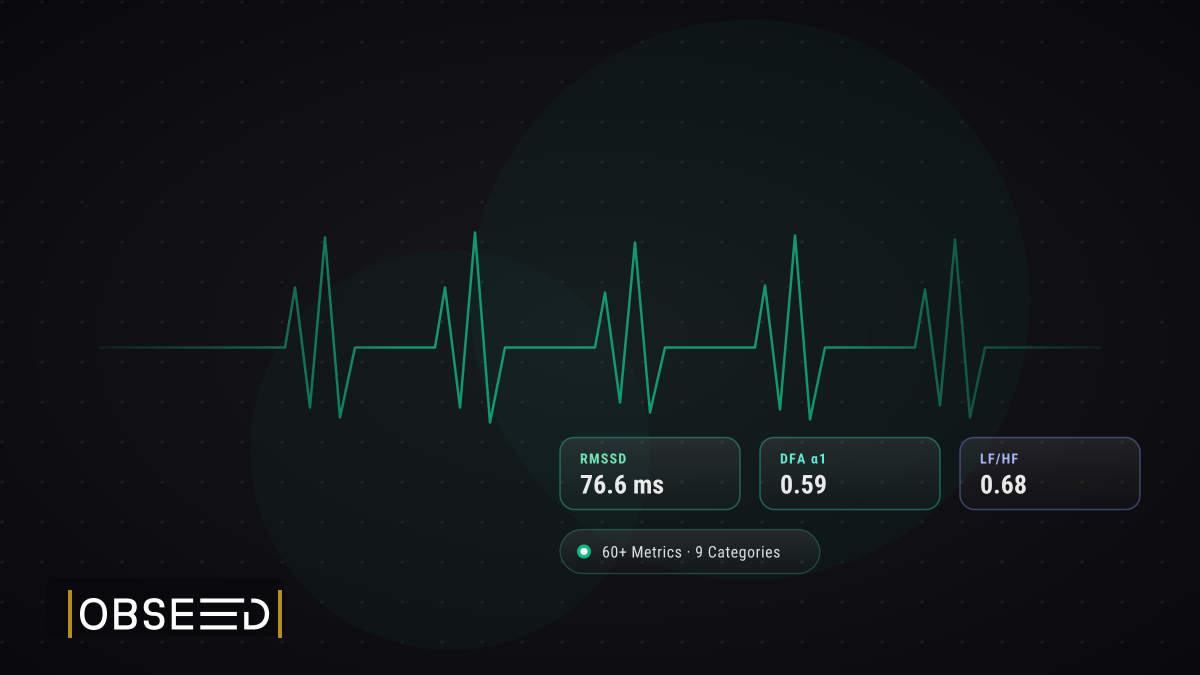
Your Nervous System, Decoded: HRV Analytics in obseed
60+ HRV metrics across 9 physiological categories from your wearable: Poincaré, DFA alpha-1, multiscale entropy, personal baseline, and 15-page reports.

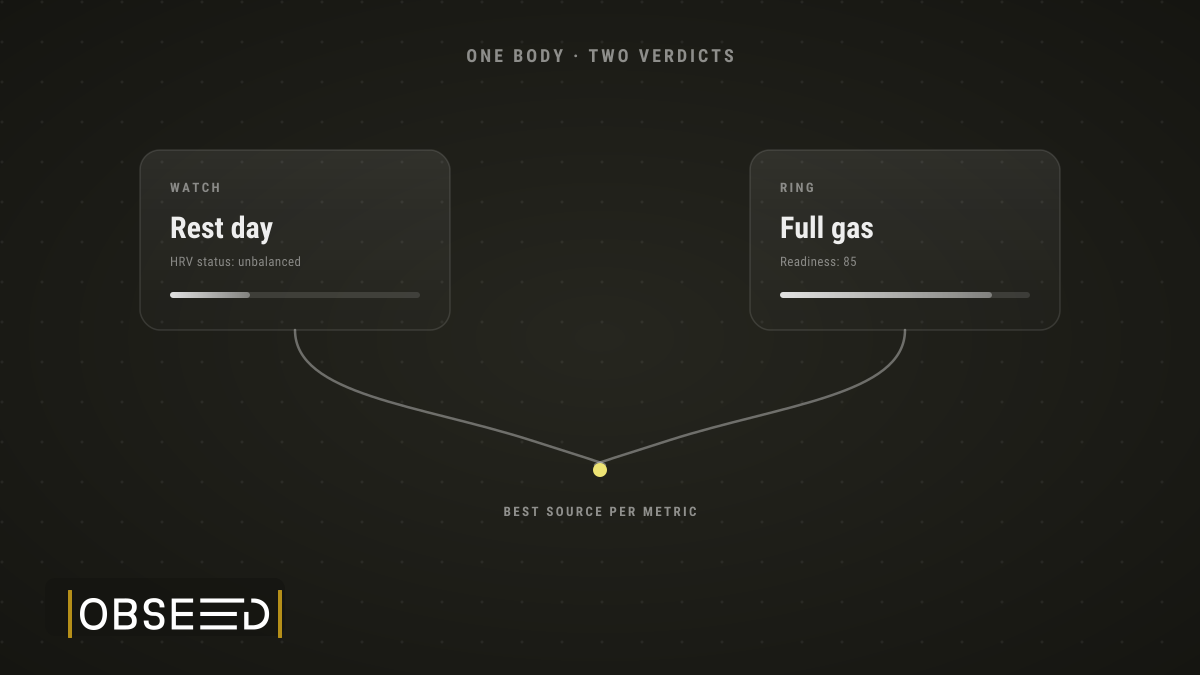
The Tracker Tango in the Data Jungle: Which Device Should I Believe?
Whoop says rest day, Garmin says threshold training. Why wearables contradict each other, and why your measurement method matters more than who is right.

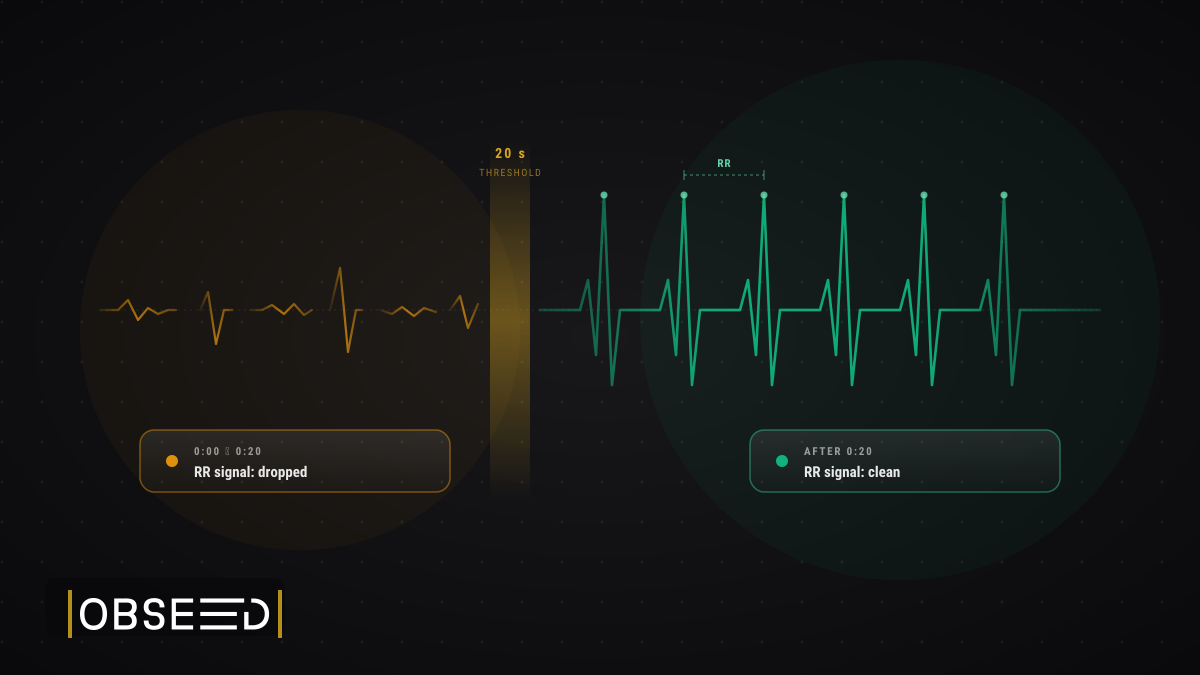
Measure Twice: Understanding Heart Rate Variability and Using It Right
What HRV really measures, why your nervous system sets the tempo, and why twenty seconds before you hit start decide the data quality of an entire session.