Lab or Wearable, That Is the Question: How Do I Know My VO2max Is Right?
A watch does not measure your VO2max, it estimates it. Why that estimate is surprisingly good for recreational athletes, and why it misses for the very best.

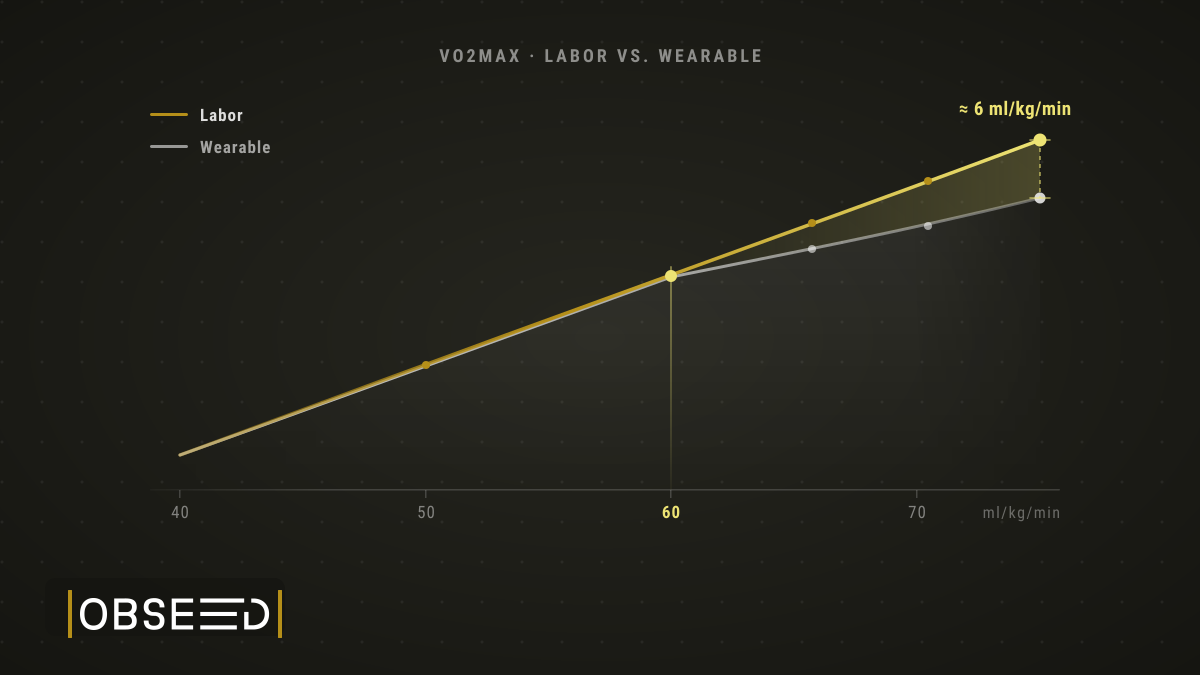
TL;DR: Sports watches and wearables can estimate your VO2max from body data such as height, age, weight and activity. That value matters less than most people believe. On top of that, the calculated numbers can differ considerably from the real ones: the fitter an athlete is, the higher the chance that the watch gets it wrong.
“VO2max is the single most important indicator of performance and health”.
That statement has become so widespread by now that it is happily accepted as fact. Which is exactly what puts it on our radar, because at obseed we like to ask: is that actually true? And: which number can you trust?
We have to take a small detour here and first talk about what this VO2max even is. After that, we can start asking questions.
In general terms you will find the following statement: “VO2max is the maximum amount of oxygen the body can take up under load”.
Two things of great relevance are already hidden in that simple sentence: first the little word “take up”, and second the claim “maximum”.
VO2max is usually given as a two-digit number, sometimes with one decimal, which on a sports watch looks something like this:
VO2max cycling: 55.0
That means the body in question is able to take up a maximum of 55 millilitres of oxygen per minute per kilogram of body weight. So it is what is called a “relative” value which – and this is the bad news – unfortunately says very little about actual performance.
Because two very important questions come up here. When we talk about “taking up”: WHERE does this number come from? And WHERE TO does that oxygen go?
In sports watches it is usually simply calculated. There are a few methods for that, either via maximum heart rate or via the data a watch records. Besides heart rate, age, height and weight also feed into the calculation.
So the relative VO2max value on a watch is the result of a calculation, which is then assigned to a comparison group and rated accordingly.
That still does not explain what exactly happens – and where this oxygen is ultimately taken up.
Let us calculate backwards for a moment: if we are talking about millilitres per minute per kilogram of body weight as a relative maximum, we can theoretically work out what the absolute figure is. Quite simply, by multiplying the value by body weight. Let us take an athlete of 70kg for the example:
VO2max relative: 55.0 ml/min/kg
VO2max absolute: (55.0 x 70.0) = 3850 ml/min, or 3.85 litres/min
That still does not explain where the oxygen is taken up. And this point matters a great deal.
Short and sweet: we are talking about the oxygen that arrives in the musculature actively involved in the movement, and can be taken up there.
(Side note: this is why there are different values here. The amount of musculature involved already differs between cycling and running. So there is not one VO2max, there is strictly speaking one per sport.)
To put it a little more precisely, what we have here is an interplay of lungs (supply), circulation (transport line), heart (“engine” of the transport line) and active musculature (“consumer”).
So Is More = Better?
That cannot be said across the board, because far more important than the relative amount of oxygen is the absolute one. That is what shows how much musculature is able to take up oxygen at all. And this is exactly where function comes into play, because otherwise every bodybuilder would be an absolute endurance specialist. That function determines how much oxygen can be taken up for the movement in total. And even more so how it is used, which is a whole topic of its own again.
If, on the other hand, the value is calculated in relative terms from the parameters mentioned, it may well end up a long way from reality.
Which raises another important question: is that a problem?
Put simply: no, not necessarily. It is advisable, though, to keep a general eye on the values, because how they behave can be a sign of whether they are within the range of reality or not.
Factor 1: How VO2max Behaves
As mentioned, there is no such thing as the VO2max. It is a value that depends directly on the amount of functional musculature involved in the movement. We can pull that thread a bit further: it also explains why even labs sometimes measure different values from one day to the next.
When a system is fatigued, not all muscles work the same way any more. Which means that less oxygen can be both taken up and processed. The result is obvious: the maximum amount of oxygen that the system can use for movement varies with time of day, fatigue, prior load, as well as general coordination and the ability to recruit as many muscles as possible.
So if a device or its app shows you a VO2max that changes now and then, that is a good sign and an indication that the body, which also changes, is being taken into account and respected. If the VO2max value only ever goes up, however, there is a good chance that behind it sits a calculation designed primarily to serve the good feeling of a supposed improvement, and not necessarily the health of its users.
Factor 2: The Method of Determination
Here we once again have two fundamental differences: we can measure – or calculate. In a lab working with spiroergometry, you can assume that the values obtained genuinely reflect what is going on in the body at the time of the test.
Without a lab, it gets calculated, which immediately means that accuracy depends firstly on how reliable the input data feeding the formulas is. And secondly on the reference group available. And here things emerge that, for once, speak very much in favour of some wearables.
This is where the power of numbers shows: since most people wearing a sports watch, a band or a smartwatch are not professional athletes, the reference group is almost identical to the target group. In other words: particularly in recreational and health-oriented sport, the values calculated by wearables are often almost identical to the ones measured in a lab. At the same time, top athletes sometimes show very large deviations here – in both directions. A lab study with 35 endurance athletes put numbers on how large: for moderately trained participants the watch under test was around 3 to 4 % off the lab value, above 60 ml/min/kg it was 9 to 10 % – and there it underestimated by roughly 6 ml/min/kg.
Conclusion: The Situation Decides
So which value can you trust: the one from the lab, or the one calculated by an app or a watch?
That cannot be answered across the board, but this much can be said: the larger the user group, the more accurate the values. In no case, however, can you calculate what ultimately happens to the oxygen inside the body. If you want to know what is actually going on in there during sport, there is still no way around a lab.
Read Next
Thresholds and Maximum Values: The Who's Who of Diagnostics
VO2max only tells you what would theoretically be possible, not what your body actually uses of it. And when it comes to pinning down your second lactate threshold, not even the 72 recognised models can agree.

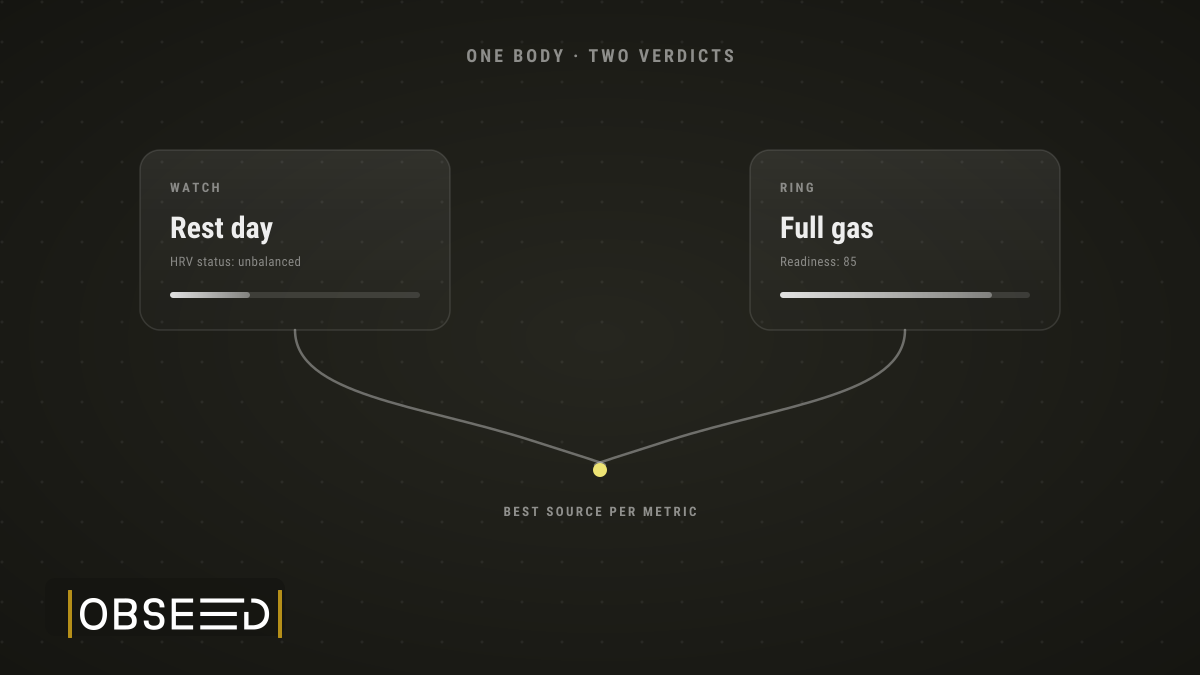
The Tracker Tango in the Data Jungle: Which Device Should I Believe?
Whoop says rest day, Garmin recommends threshold training. Why wearables contradict each other, and why picking your measurement method matters more than asking who is right.
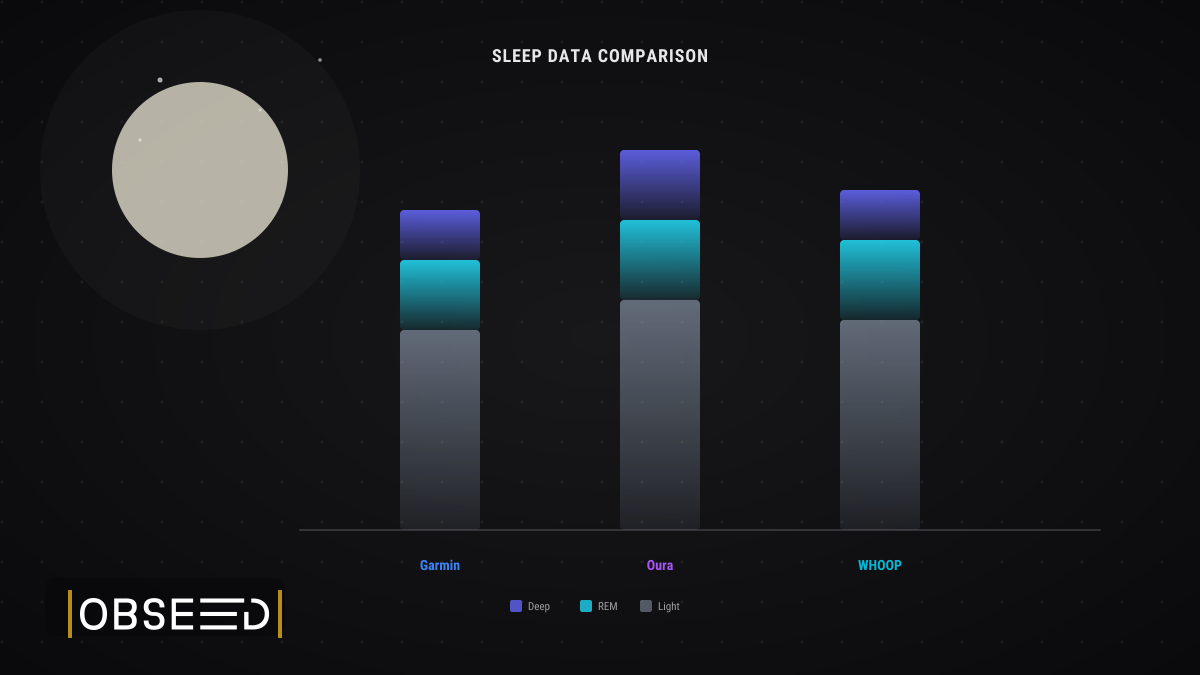
Garmin vs Oura vs WHOOP: Which Gives You Better Sleep Data?
A detailed comparison of sleep tracking accuracy and metrics across Garmin, Oura Ring, and WHOOP. Learn which device gives the most useful sleep insights for endurance athletes.
