Beyond the Numbers: Universal Hierarchical Multi-Tagging in obseed
Your wearable measures everything — except the why. obseed Universal Tagging: 290+ tags across 10 categories, 6 time models, cross-device correlation.

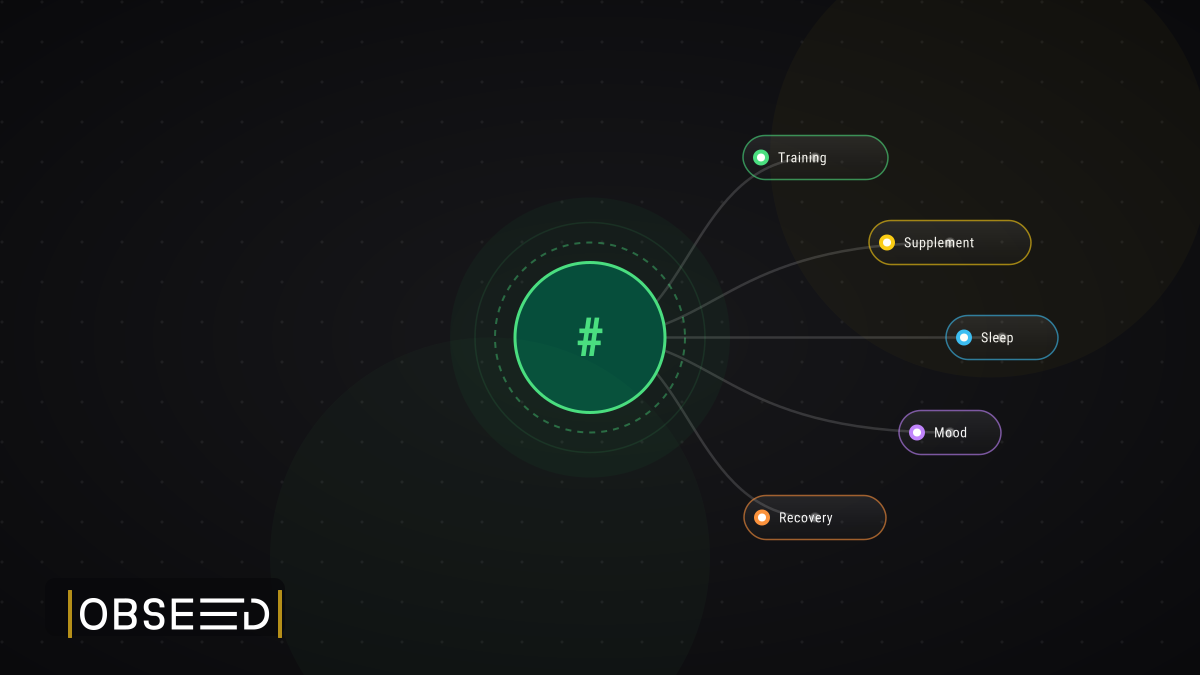
Your Oura ring tracks your sleep. Your Garmin counts the calories — and Whoop measures your recovery, down to the percentage point. And yet you still don’t know whether you slept poorly because you had coffee at 5 PM. Whether your recovery suffered because you ignored a knee injury. Whether that run went well because the conditions were right — or because you’ve actually gotten better.
Wearables measure what happens. But why? That’s still your job. It’s a problem we kept running into internally — and one that ultimately pushed us to do something about it. That’s why we built Universal Hierarchical Multi-Tagging. And today it’s live.
What Universal Tagging Does
Most health apps operate in isolation, unaware of data from other services. That’s the problem we wanted to solve. Not yet another app building its own data world — but a system that establishes context across all devices.
What we built isn’t simple labels. These are queryable attributes that transform your wearables from data collection tools into a real health operating system. When you log a supplement, you don’t just write “magnesium” — you specify the exact dosage (400 mg), the time (8 PM), and the form (glycinate). Then obseed automatically correlates that with your Oura deep sleep score, your Whoop recovery score, and your Withings blood pressure values. No manual analysis. We didn’t start small: over 290 system tags across 10 categories — recovery & sleep, nutrition & hydration, health symptoms, lifestyle & environment, training & sport, women’s health, mental & emotional, medical & therapy, biohacking, and men’s health. Each tag is hierarchically organized: “Caffeine” sits under “Stimulants,” which sits under “Nutrition & Hydration.” This makes it easy to filter, search, and analyze at any level of detail — and a single entry automatically correlates with all connected devices.
Six Time Models That Make Tagging Practical
A tagging system that demands more precision than real life allows is a tagging system you’ll abandon after three days. That was our starting point — and honestly, something we noticed ourselves with early prototypes. Too much effort, too little flexibility, and within a week the motivation was gone. Real life is messy. You might not know exactly when you started taking magnesium. You spent three days at altitude but didn’t tag every evening. No problem.
The six models:
- Instant: Took a supplement at 7 PM. Done.
- All-day: Did an elimination diet on Tuesday. Tag the whole day.
- Interval: Spent three days at altitude. Define a start and end.
- Date range: Tracked a cold for a full week. Capture the entire arc.
- Approximate: Not sure when you started? Tag it loosely — we correlate based on date patterns.
- End + Duration: Fasted for 14 hours. Define how long it lasted and when it ended.
This flexibility means tagging adapts to your life — not the other way around.
Attributes That Actually Matter
“Sauna” as a tag alone isn’t enough — we realized that quickly. What matters: How hot was it? How long? How often per week? Only with these attributes can you answer a real question — like how a 15-minute sauna at 80 °C affects your HRV compared to 20 minutes at 90 °C. Every tag can therefore carry structured attributes. “Symptom: Headache” includes severity (1–10) and location. “Equipment: Running shoes” includes age (miles worn) and shoe model. “Menstrual Cramps” carries an intensity scale, “Blood Pressure Checked” captures systolic, diastolic, and posture, “Medication Log” documents active ingredient, dosage, and form. The data flows automatically from the tag into comparative analysis — you don’t need to manually combine anything.
A systematic review of 33 studies in Translational Behavioral Medicine found that context-aware digital interventions improve health behavior in areas like exercise, nutrition, and medication adherence (PubMed, 2021). Raw metrics alone aren’t enough. Structured context is what makes data actionable.
A/B Comparisons Built In
Systematic comparisons of whether evening caffeine actually disrupts sleep are nowhere to be found in existing apps. That’s why we’ve implemented negative/positive tag pairs throughout — 89 negative tags in total:
| Positive / State | Negative / Absence | Category |
|---|---|---|
| Caffeine | No Caffeine | Nutrition |
| Foam Roll | No Foam Roll | Recovery |
| Cool Bedroom | Warm Bedroom | Sleep |
| PMS | No PMS | Women’s Health |
| Sad | (Absence) | Mental & Emotional |
| Sick | (Absence) | Health Symptoms |
You ask the system to compare days with a condition against days without. Instantly. Cleanly. No spreadsheets, no complicated filtering logic.
Cross-Device Correlation with Universal Tagging
This was the core idea from the start: tag once, correlate everywhere. When you log your magnesium supplement in obseed, we instantly correlate it with:
- Your Oura deep sleep percentage and REM latency
- Your Whoop recovery score and strain
- Your Wahoo training load and performance data
- Your Withings blood pressure and body weight trends
All in one view. No switching between apps, no manual merging.
Who This Is For
When building the system, we kept thinking about specific people — not biohackers in labs, but people who simply want to understand why their body responds the way it does.
Sport & Biohacking
Serious athletes know their training matters but can’t figure out why some recovery protocols work and others don’t. Biohackers and n=1 experimenters have been running their own protocols in spreadsheets and want a platform that actually understands what they’re doing.
People managing chronic conditions need to understand which interventions actually move the needle. Depending on the country, between 44% (Portugal) and 81% (South Africa) of gym-goers regularly take supplements (PMC/MDPI, 2024) — but almost no one can say whether they actually make a difference. That’s exactly what we want to change.
Women’s Health, Mental Health & Medical
Women who want to understand their body better — whether it’s about their cycle, pregnancy, or menopause. 25 dedicated women’s health tags capture PMS intensity, ovulation, LH tests, breastfeeding sessions with side and duration, hot flashes, and hormone replacement therapy. Everything correlates automatically with sleep, HRV, and recovery — across all your devices.
People tracking their mental health — mood, stress, cognitive performance. From “Happy” and “Relaxed” to “Anxious” and “Brain Fog” to “Work Stress” and “Low Motivation”: 20 tags with positive and negative counterparts make visible how your mental state connects to sleep, training, and nutrition.
People who need to document medications or treatments — with structured medication logs (active ingredient, dosage, form), blood pressure and blood sugar monitoring with context attributes, and tags for physiotherapy, acupuncture, or surgery.
And health-conscious professionals, who know that sleep, recovery, and nutrition are their foundation — but can’t find a system that brings all those threads together into one coherent picture.
Why This Matters
The quantified self movement has given us remarkable access to our own bodies in a short time. What we observe: people with more data tend to ask more questions — not fewer. The sense of being able to measure almost everything doesn’t make the missing “why” easier to bear — it makes it more frustrating.
We hope Universal Hierarchical Multi-Tagging is the answer to exactly that. Not the perfect answer — but a first, real step toward a system that understands why your body responds the way it does.
Your wearables capture the numbers. obseed captures the story behind them.
Disclaimer: obseed is not a medical device. The recorded data and correlations do not replace professional medical diagnosis or treatment. Always consult a healthcare professional for medical concerns.
Frequently Asked Questions About Universal Tagging
Universal Hierarchical Multi-Tagging is a contextualization system in obseed that lets you add structured attributes to your health data. Over 290 system tags across 10 categories enable deep correlation analyses — automatically and across all connected devices, without any manual input.
obseed integrates with Oura, Garmin, Whoop, Wahoo, and Withings. Tags automatically correlate with data from all connected devices — no manual cross-referencing required.
Depending on the situation, you choose how to anchor a tag in time: instant (a point in time), all-day, interval, date range, approximate, or end + duration. This gives you the flexibility to tag even when you don't know exactly when something began.
Yes. In addition to the 290+ system tags across 10 predefined categories, you can create your own tags with custom attributes. The hierarchical structure is preserved, so custom tags are just as queryable as system tags.
Existing apps display data in isolated silos — each one only knows its own metrics. obseed connects all data sources and adds structured context through the tagging system, enabling cross-device correlation analyses that no individual app can provide.
Read Next
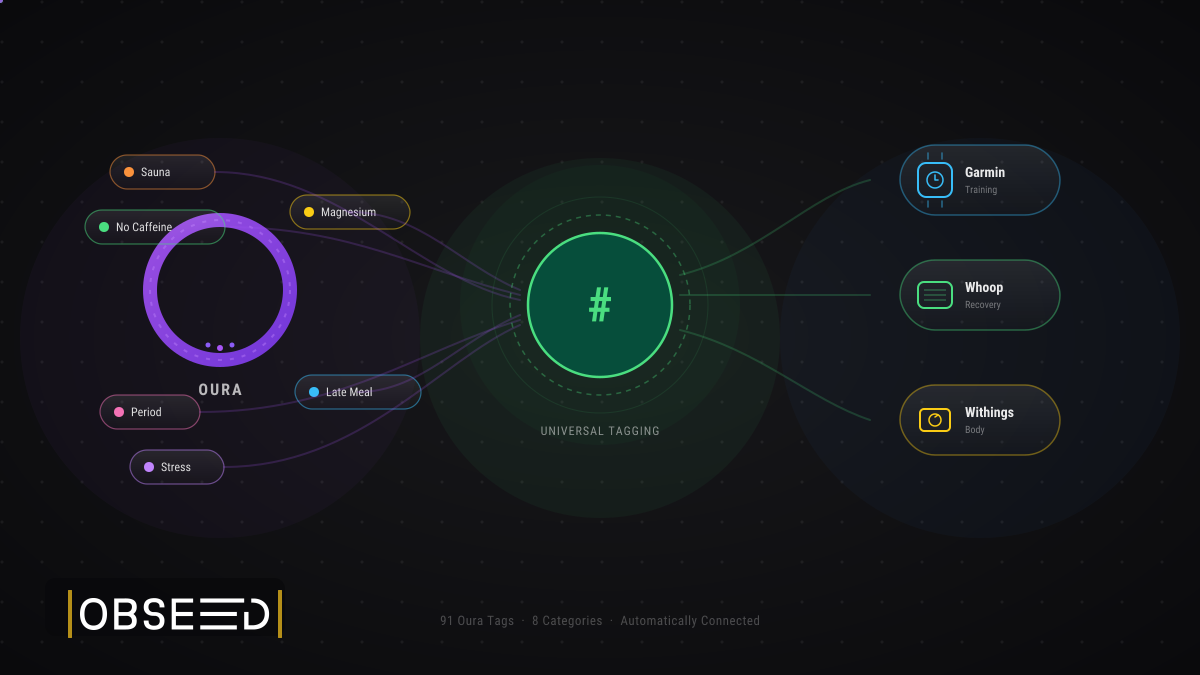
Oura Tags in obseed: 91 Signals, Automatically Connected to Your Entire Stack
91 Oura tags flow automatically into obseed — correlating with Garmin, Whoop, Withings, and Wahoo. No double entry. No silos. Your full picture.

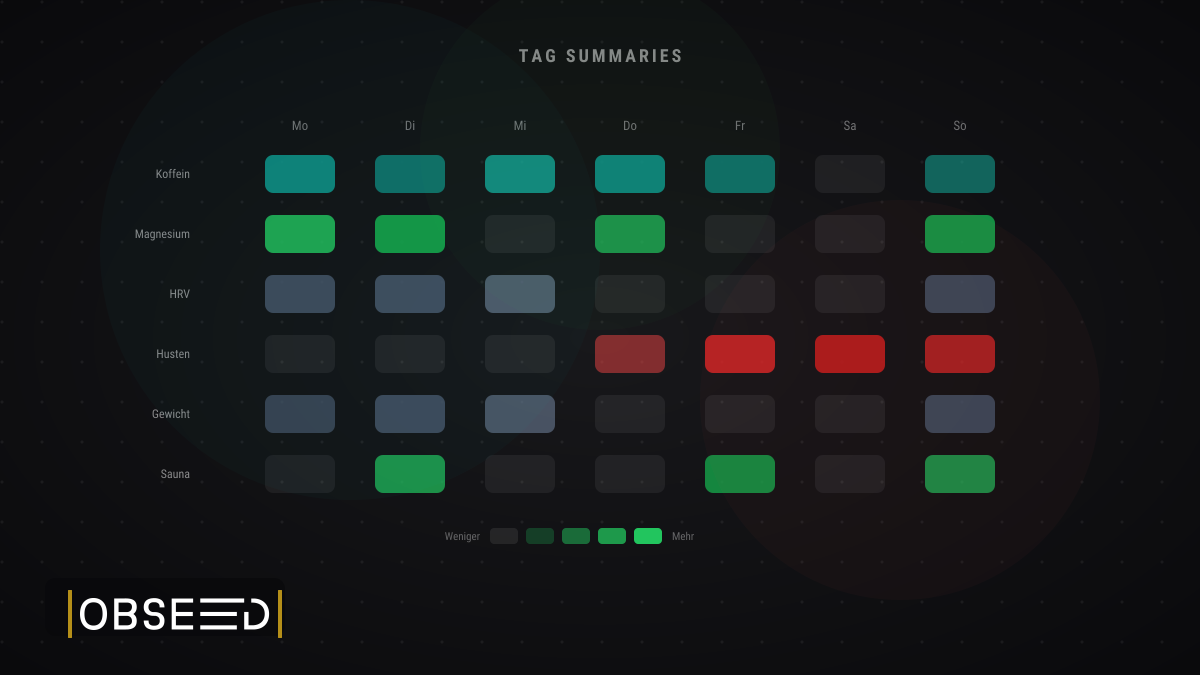
Weekly and Monthly Views: See the Pattern in Your Tags
Your daily tags now become visual heatmaps. obseed weekly and monthly views reveal supplement gaps, sickness arcs, and caffeine rhythms at a glance.
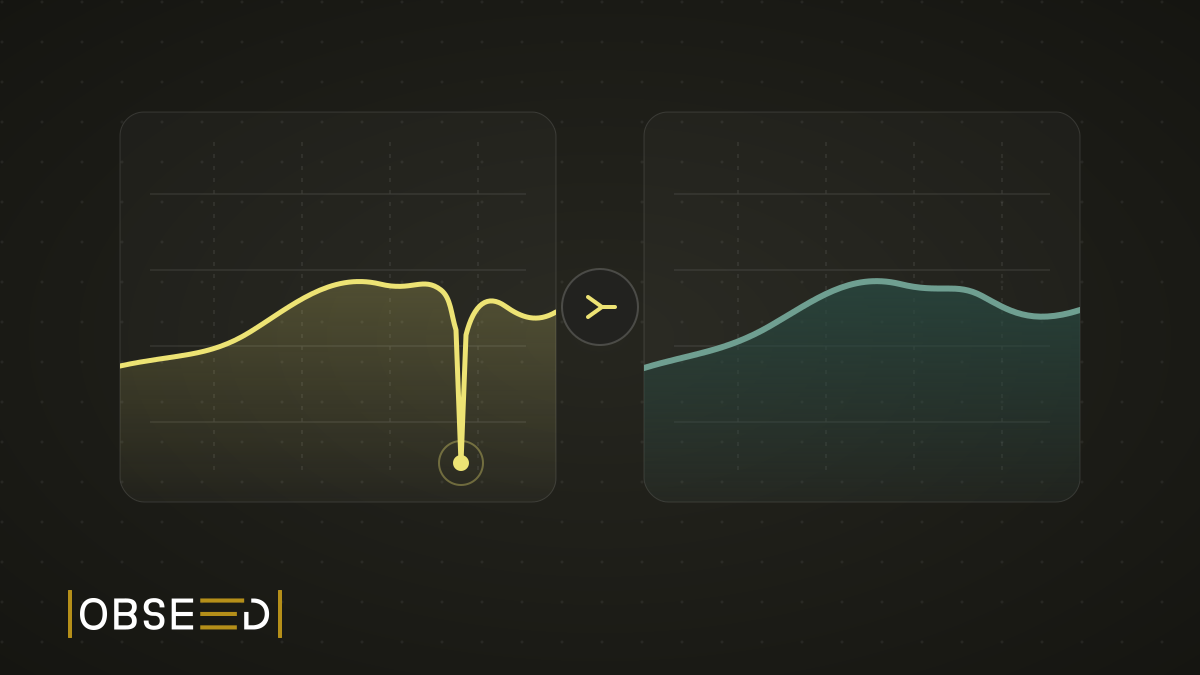
New Feature: The Mountain That Never Happened
My watch went for a swim in a fountain and invented roughly 100 metres of climbing. obseed now corrects errors like this automatically, including in your old sessions.