Data: Yes, but... which kind?
Sports are healthy? If you do them "right", absolutely. But... what does that actually mean? We look at the topic of "sports and health" from the angle we know best: data.


“It’s all in the data - but data isn’t everything”.
Anyone who has ever experienced a highly complex analysis of body data of almost any kind knows what is meant: depending on how you look at the results, you can conclude that you have reached the pinnacle of health - or will die soon.
Even if that is expressed a little sensationally, it has great relevance especially around sports: we produce data around the clock that could tell us practically anything, but doesn’t, because… well, why actually?
At obseed.me we have identified two problems here:
- The focus is often not on the data that would really help us.
- The context or even just the possibility of putting things into context is missing.
Part 1: Which data is important for us?
When we talk about data related to sports, the focus is usually relatively one-sided and we like to concentrate on so-called “primary data”. This includes:
- Training time
- Training distance
- Power
- Speed (km/h)
- Pace (min/km / min/100m…)
- Heart rate
These are data that we collect directly during training and from which we believe they tell us whether we are on the right track: if our performance increases, that must necessarily be good, likewise with speed, distance, pace… This is not fundamentally wrong, but a first major risk is hidden here: this rather one-sided type of numbers and facts primarily allows the conclusion that “more”, “harder”, “further” and “more intense” are valid conclusions for training control.
It helps to ask yourself WHAT the data shows. Primary data mainly reflects one thing: WHAT the body is currently doing.
We, on the other hand, are much more interested in HOW the body does it…
Enter: Peripheral Data.
By peripheral data, we mean things that we record mostly automatically, sometimes intentionally around sports, but to which we rarely pay the attention they deserve - for the previously mentioned reason, which we will go into in a moment. These data include (among others):
- Sleep time
- Sleep rhythms
- Sleep phases
- Resting heart rate
- Heart rate variability
- Regularity of training
- Recovery values
- Total load
- Stress load
- Body temperature
- Weight
- Blood sugar
- Blood pressure
- Energy intake
- Energy expenditure
- …
The list can be extended indefinitely. These are data that give us information about HOW the body can produce the primary data, even apart from laboratory examinations. A simple conclusion is that everything that happens in primary data collection, both positive and negative, has its origin in the periphery. So it would be more than worthwhile to pay more attention to these things. Because: Here we are dealing exclusively with numbers, data and facts that ultimately relate to health, so they are relevant not only for top athletes, but for… everyone.
No sports without health - it’s that simple. And if the periphery could tell us that the training is too intense, too easy or just right… wouldn’t that be great?
Part 2: Causality and Correlation
One of the very big difficulties in this area consists of the fact that the world market offers a vast amount of devices and wearables, most of which perform the task for which they were designed first-class for themselves. There are more and more clinically validated gadgets in the health sector, starting with finger rings that allow sleep tracking at almost laboratory level to body analysis scales that come close to the data precision of an X-ray scan.
And it goes even further: most of us are equipped with one of these wearables today, often with two or even more, partly additional devices are also used.
This leads to a situation that ultimately holds the potential for more performance, health, well-being, but at the same time also HIDES it: with every single device comes a new app that needs to be maintained, a new subscription that needs to be solved, time that needs to be spent to understand it.
We repeat ourselves: it goes even further. This quickly results in a state of limbo of permanent information about what the body does and how it does it - unfortunately without really being able to draw conclusions from it.
Our Approach: Freedom of Choice
This fact has been weighing on us at obseed.me for a while - maybe even literally? The data would probably have shown it… - which led to the fact that we now offer our users the opportunity not only to analyze their data, but also to decide which data they want to see from which device.
“THIS device records my sleep very well, THIS watch is much better in sports…”
Your feedback, our action:
In the settings, obseed.me now allows you to directly link different profiles from different manufacturers and then decide which data is preferred for which statement / analysis.
This function is currently unique and we are convinced that we can make a valuable contribution to helping our users not only to more energy in sports and everyday life, but also to be an active support for their health.
We offer the possibility to carry out long-term analyzes on a wide variety of topics, to understand how different behaviors and / or training affect our body and thus lay the basis for a neutral, unvarnished, but also uniquely meaningful decision-making basis for the future.
We call this the “DNA of Performance”: the factors that make us better as humans on every level.
Read Next
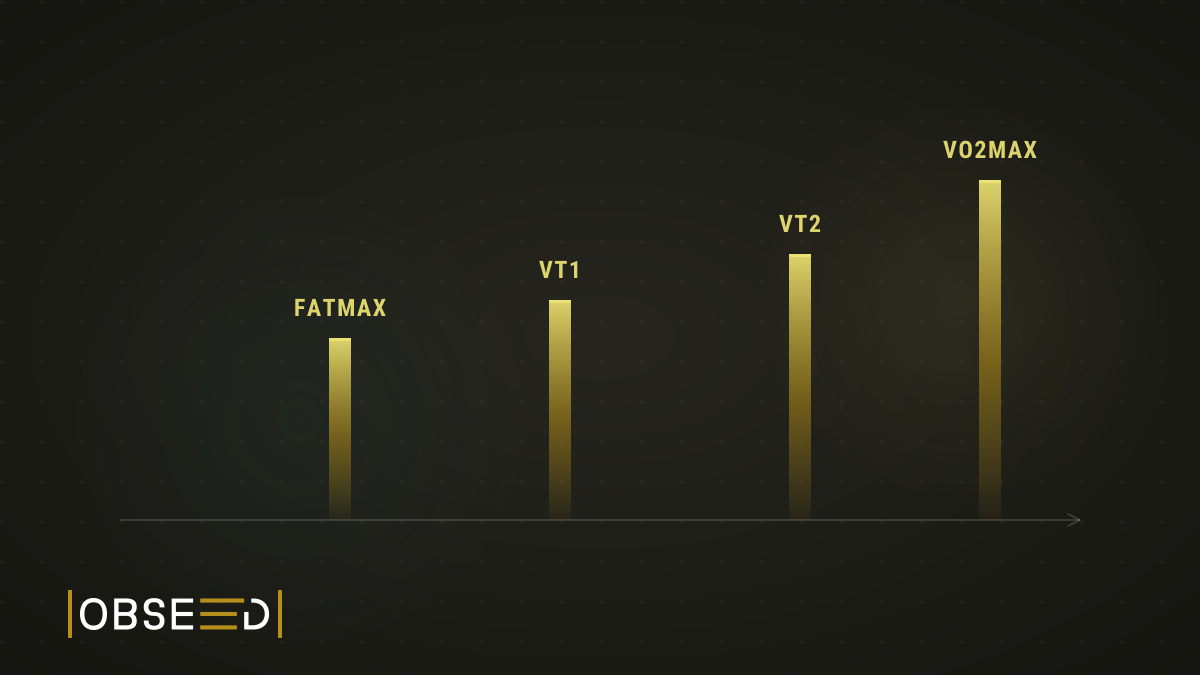
Thresholds and Maximum Values: The Who's Who of Diagnostics
VO2max only tells you what would theoretically be possible, not what your body actually uses of it. And when it comes to pinning down your second lactate threshold, not even the 72 recognised models can agree.

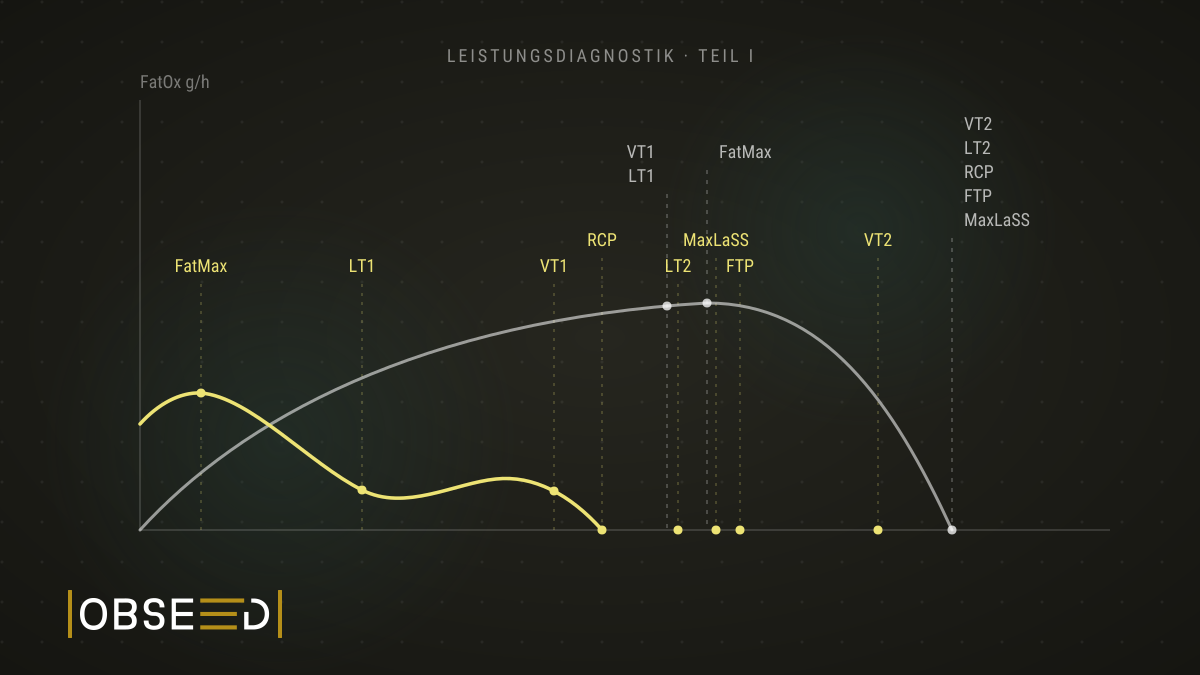
Performance Test vs. Diagnostic: What Is the Difference?
A test shows you WHAT a body can do. A diagnostic shows you HOW it does it. Why that difference decides whether your Zone 2 is actually a Zone 2.
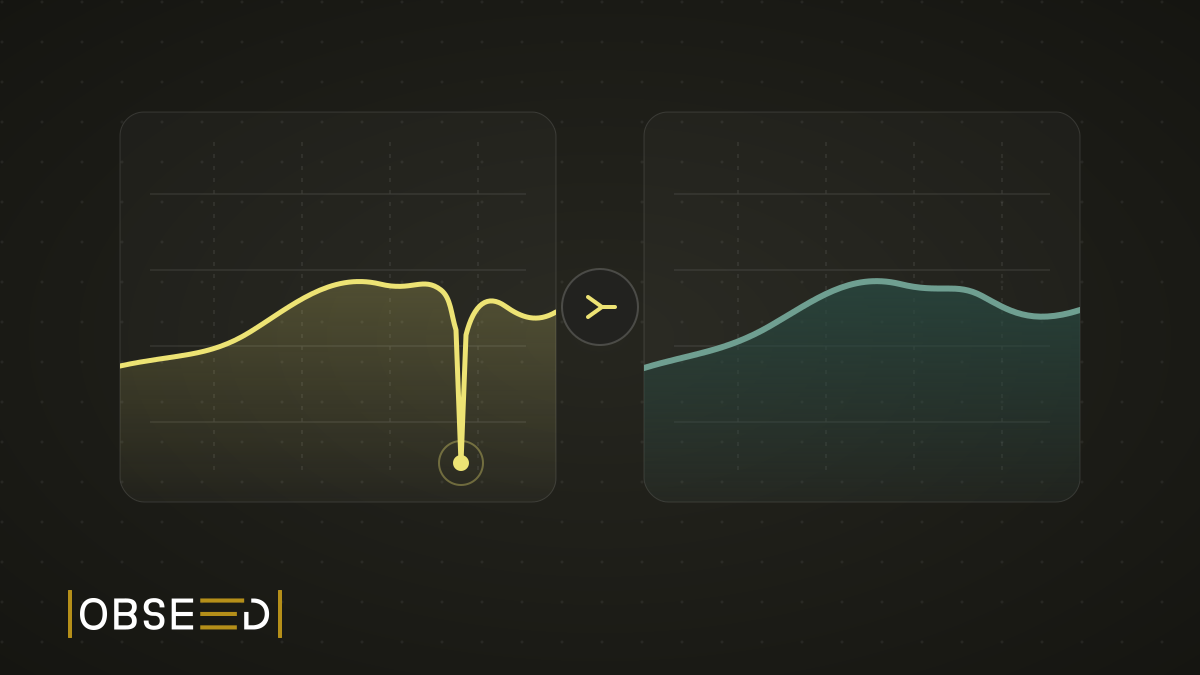
New Feature: The Mountain That Never Happened
My watch went for a swim in a fountain and invented roughly 100 metres of climbing. obseed now corrects errors like this automatically, including in your old sessions.
